







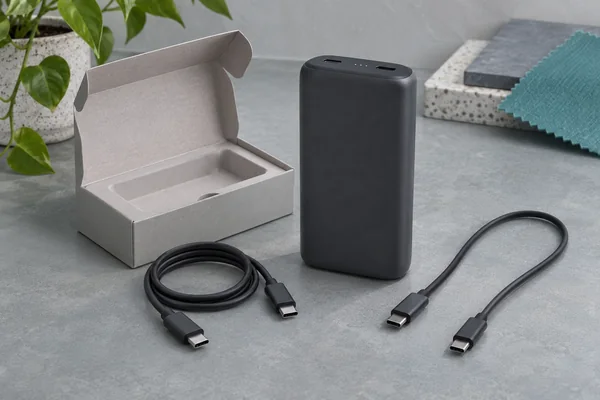
Why Can a Power Bank Pass Factory Testing but Fail With the Cable in the Box?
A power bank can pass a USB-C check at the factory and still fail with the cable customers unpack. The test station may use a different lead from the one in the carton. Before releasing a private-label order, compare the two cables on the same finished unit and receiving device, then repeat the check with samples taken from packed stock.
This check is for a power bank sold with a detachable USB-C to USB-C cable. It covers the kit as packed. Cable certification and electrical safety still need their own evidence.
Find out which cable earned the pass
Ask to see how the supplier checks USB-C output. Is the operator plugging in the cable supplied with the product, or a station lead that stays attached to the test fixture? A fixed lead can be a sensible way to check units on the line. If the cable from the carton never enters the test, though, a pass tells you nothing directly about how that individual cable works with that unit.
Ask for the power bank’s SKU and revision, the exact USB-C port and the device or load used. Keep part numbers for both the station lead and the cable supplied in the box. Ask the supplier to state what counts as a pass. If the box advertises a particular USB Power Delivery mode with the included lead, the acceptance record needs evidence of that mode under the agreed conditions. A charging symbol alone only shows that the device recognized a charging connection at that moment.
Документ USB Implementers Forum’s cable and connector guidance separates USB-C cable power capability and data markings. Identical plug shapes do not tell you that two cable assemblies have the same declared capabilities. A cable rating also does not establish that the power bank and receiving device will select the charging mode pictured on the packaging.
Change one thing at a time
Start with a test combination that previously met your acceptance criteria. Use the same power bank, USB-C port and receiving device or agreed load for the first two runs. Record the power bank’s charge range, the test setup and any reconnects or interruptions. If a meter forms part of the setup, keep it in the same place for the comparison. If the symptom only appears with the meter removed, record that separately rather than treating the two setups as identical.
Run the reference cable first and then the cable from the carton. Restore the relevant starting conditions between runs. An actual phone or laptop gives you a useful check of a named customer use; a suitable load and protocol analyzer can help a qualified tester check the USB PD mode. A device and a controllable load are not interchangeable evidence. See YULIDA’s guide to checking power bank fast charging for the protocol test details.
| Test setup | What stays the same | What the result tells you |
|---|---|---|
| Finished unit and reference lead | Power-bank port, receiving device or load, and agreed starting conditions | Establishes the baseline. If it fails, resolve the setup or unit issue before judging the packed lead. |
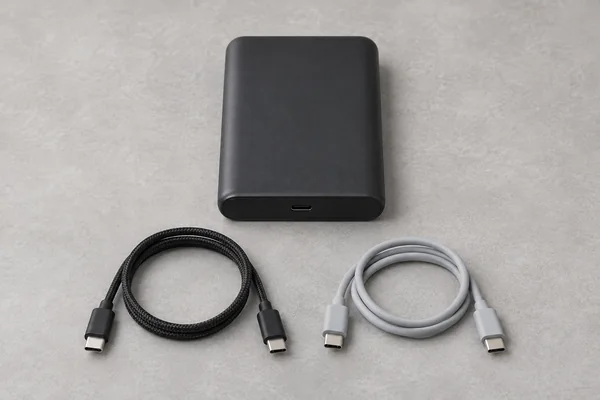
| Same unit and the cable from its carton | Everything except the cable | A difference points to a cable-dependent result in that setup. It does not prove which component is defective. |
| Another packed lead and a second approved unit, run as separate swaps | Keep the device and acceptance criteria fixed; swap only one part at a time. | Shows whether the symptom follows a cable, a unit or a specific pairing. Keep the original failed pair for review. |
If the packed cable fails and a spare works, keep the first result on the report. Label the original bank and cable, and write down which combination worked. A failure could be confined to one cable, or it could involve the way a particular cable and port work together. Let the second swap narrow that down.
Pull the check from finished stock
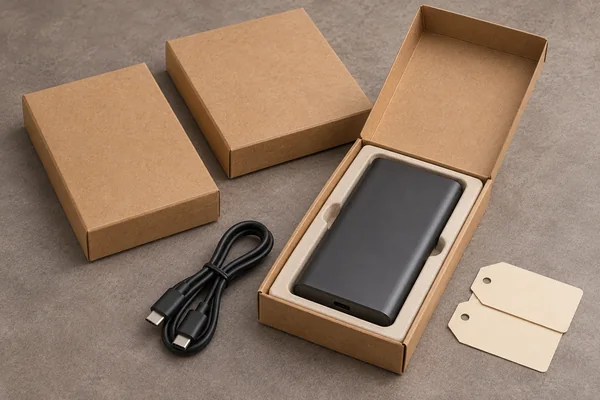
A sample hand-carried from engineering is useful for agreeing the method. It is not a substitute for checking the units and cables that made it through packing. Draw finished cartons under the agreed inspection plan. Open them together with the supplier or inspector; record the carton identifiers, the bank’s lot and the cable revision or whatever packaging and receiving records can identify that cable batch. The cable pouch may have no visible lot code. Before production, ask how the factory will link the received cable batch to the cartons it packs.
Map the box claim to a result the inspector can see. The kit may be promised to start and sustain charging on named compatible devices, or the specification may require a particular PD mode with the supplied lead. Decide how long to observe, what interruptions count as a failure, and what the inspector should do if either comparison fails. These are purchase-specific decisions. An agreed pre-shipment inspection plan should say how to select samples and isolate affected stock.
Put release and cable substitutions in the purchase specification
Record the approved lead as an accessory, not just as “USB-C cable included.” Identify the part or revision, connector types, length or tolerance where it affects packing, and the behavior to verify with the finished bank. If the supplier proposes an equivalent lead, ask which evidence carries forward and repeat the checks affected by the change before treating it as approved.
If the factory’s reference passes but the packed combination misses a requirement, keep the affected stock separate while you establish the scope. Compare carton and intake records before deciding which batches to hold. Ask the supplier for the failed and passing combinations, the identified stock, and proof that the proposed fix works with newly drawn packed samples.
For an inquiry to YULIDA’s OEM/ODM team, share the advertised use, the devices or agreed load you want checked, and the proposed cable specification. Ask whether the line check and packed-kit check use the same lead. Record both methods in the sample approval record so the buyer and inspector can repeat them.
Часто задаваемые вопросы
1. Why can a power bank pass a factory test but fail with the included USB-C cable?
The factory may use a dedicated reference lead. If the included cable is not part of that check, a pass does not show that the packed cable and finished power bank work together under the same conditions.
2. Is a charging icon enough to approve the USB-C cable in the box?
No. It shows recognition of a charging connection at that moment. If the purchase specification requires a specific charging mode or sustained operation, record that behavior under the agreed conditions.
3. What should stay fixed when comparing two USB-C cables?
Keep the same power bank, port, receiving device or load, instrument setup and starting conditions. Change only the cable in the first comparison.
4. Does one failed cable swap prove the packed cable is defective?
No. Preserve the failed pair and compare it with another packed cable and another approved power bank in separate swaps. A result can depend on the particular cable and port pairing.
5. Does the cable’s printed power rating prove the power bank delivers that wattage?
No. The cable rating concerns the lead. The power bank and receiving device must also support and select the stated mode under the test conditions.
6. Should inspectors use engineering samples or open finished cartons?
Use engineering samples to agree the method. Use cartons selected under the inspection plan to verify that the accepted power bank and cable actually made it into the packing run.
7. What should happen if the supplier substitutes the included cable?
Record the proposed part or revision and repeat the affected checks using a finished power bank and the replacement lead. Do not treat the previous cable’s approval as automatic approval for the substitute.
8. What belongs in the failed-test report?
Record the carton and lot identifiers, bank and cable identities, port, device or load, conditions, observed failure and any combination that passed. Keep the original failed pair available for review.
Официальные источники и проверка
Эти первоисточники подтверждают рассматриваемые в статье сведения о стандартах, совместимости, безопасности или перевозке. Уточняйте действующие требования для точной модели продукта и целевого рынка.
- USB Implementers Forum — Спецификации и рекомендации по USB Type-C и USB Power Delivery.
