







Description
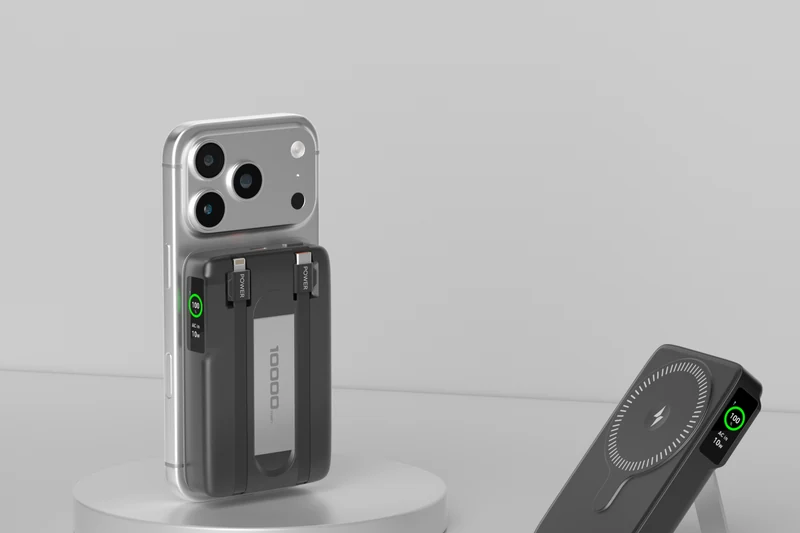
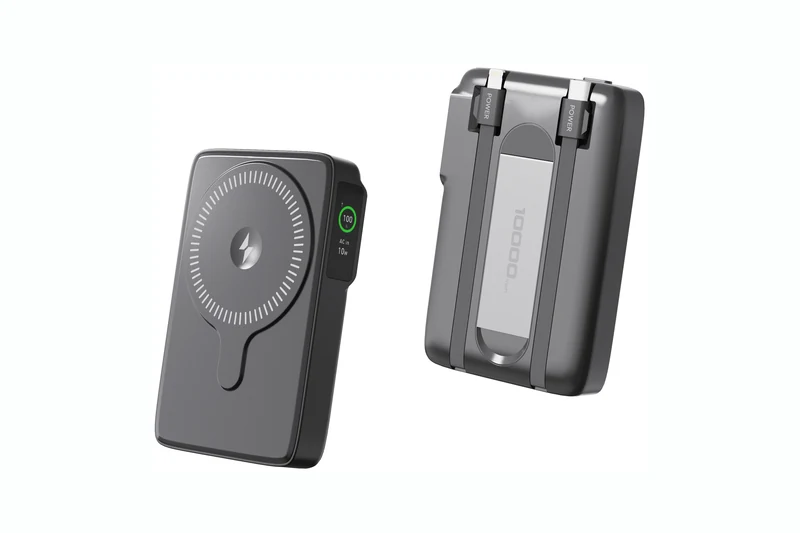
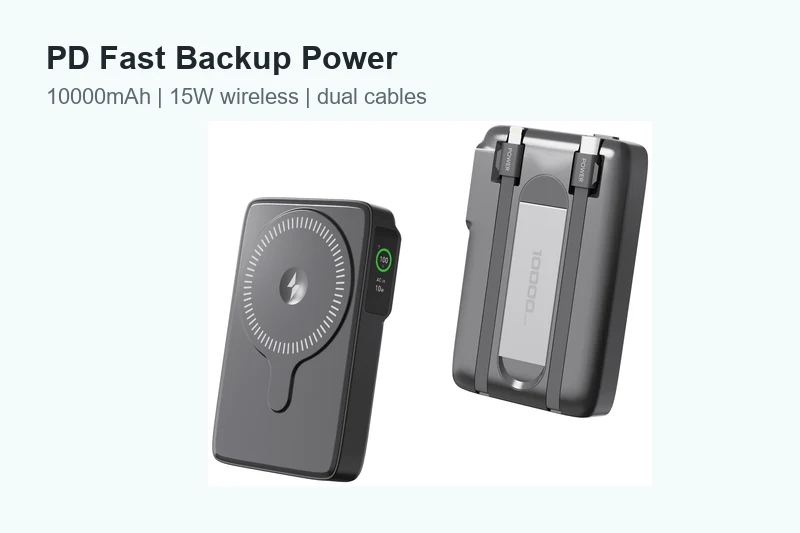
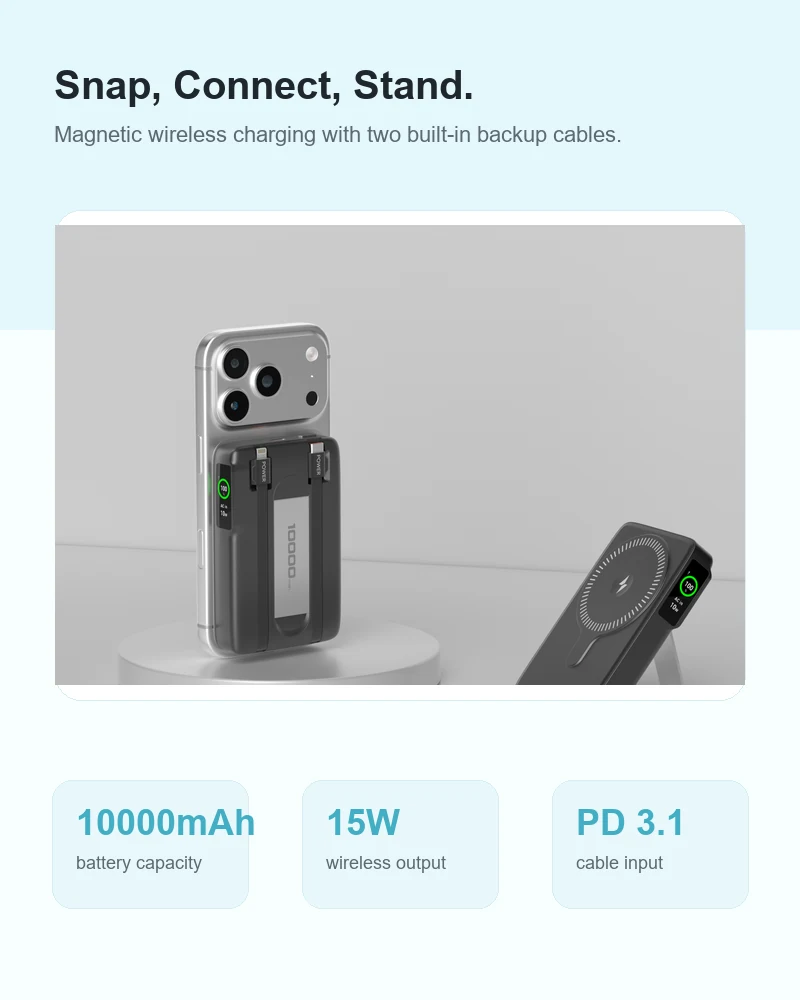
AJ30 is a 10000mAh magnetic wireless power bank platform with built-in Type-C and Lightning cables, a separate Type-C port, stand mode, and a side power display. The published specification lists 38.5Wh rated energy, wireless output from 1.5W to 15W, Lightning cable output at 5V/2A, and Type-C port and cable output profiles up to 12V/1.67A. Protocol labels, magnetic performance, device compatibility, display accuracy, simultaneous-output behavior, and certification scope require confirmation on the approved production specification and sample.
AJ30 Magnetic Wireless Power Bank at a Glance
- Published capacity: 10000mAh at 3.85V / 38.5Wh.
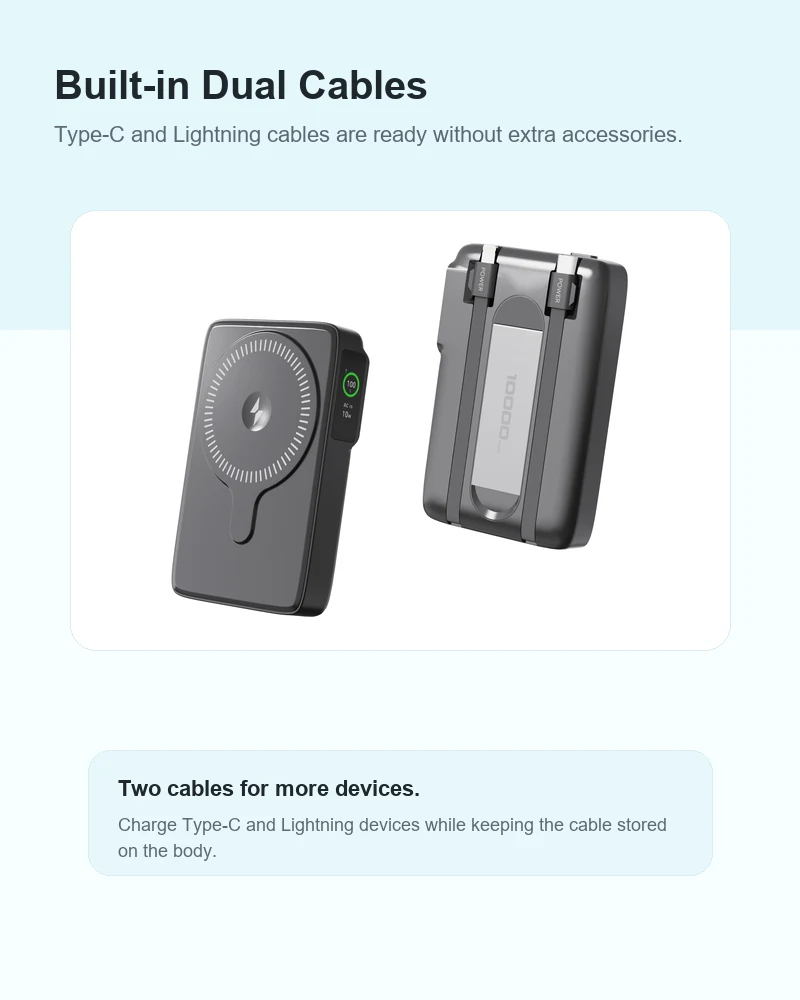
- Charging design: magnetic wireless surface, Type-C port, built-in Type-C cable, and built-in Lightning cable.
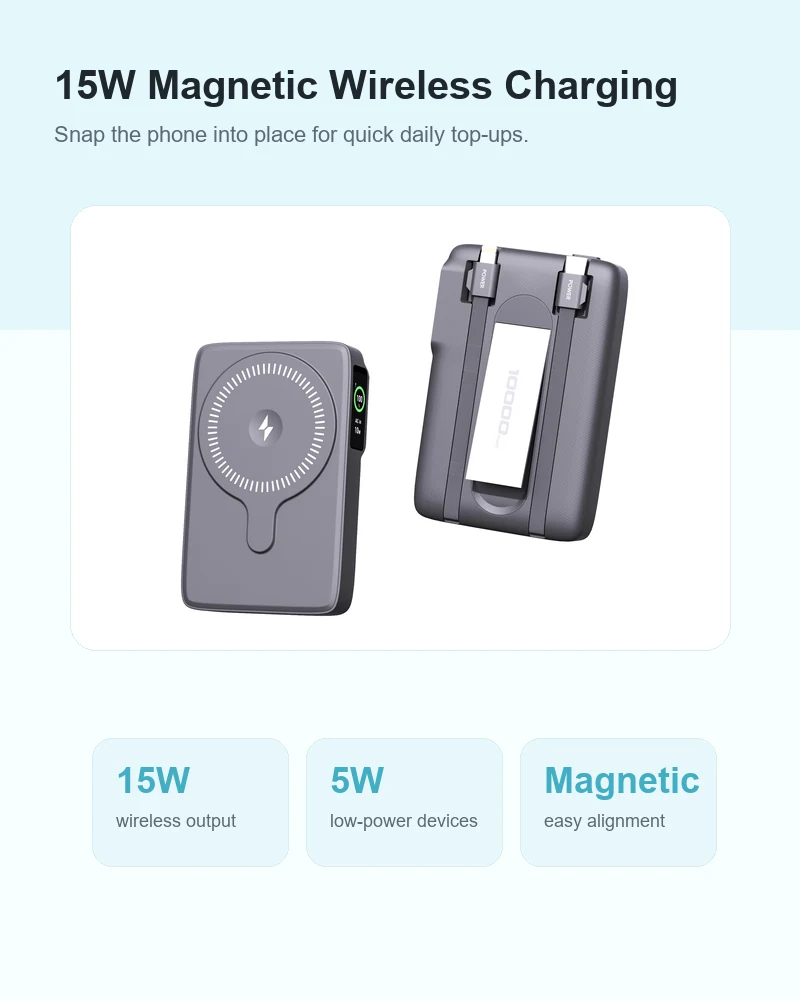
- Published wireless range: 1.5W-15W; device-specific performance requires verification.
- Wired profiles: Lightning cable output is listed at 5V/2A; Type-C port and cable outputs are listed up to 12V/1.67A.
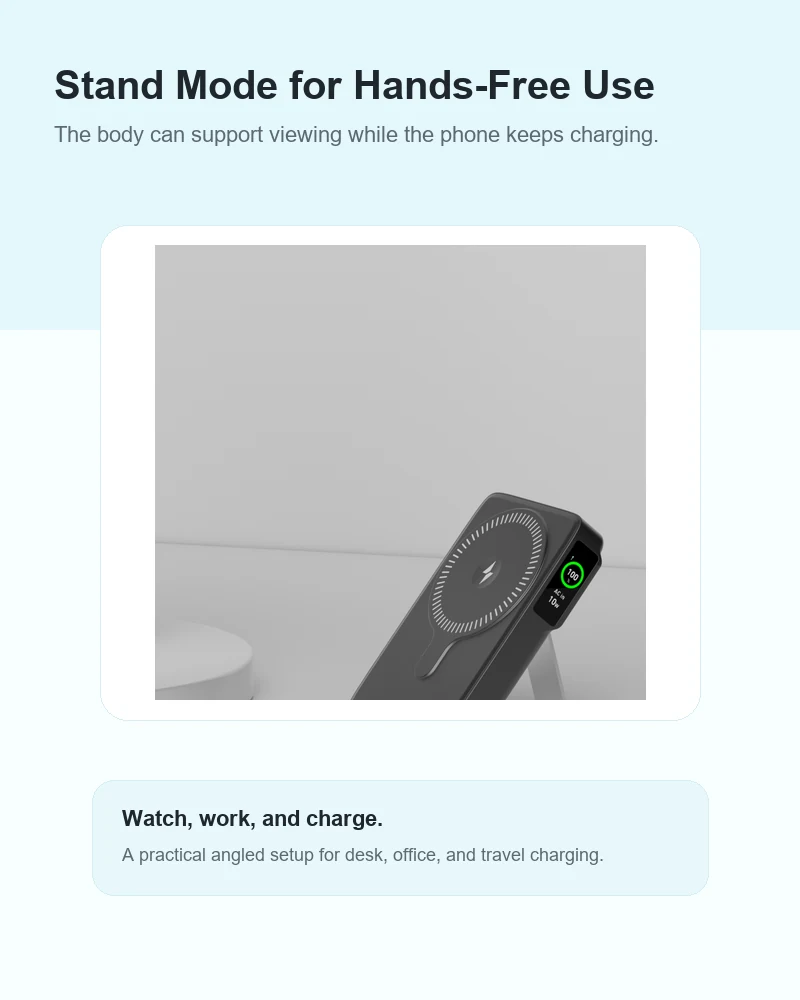
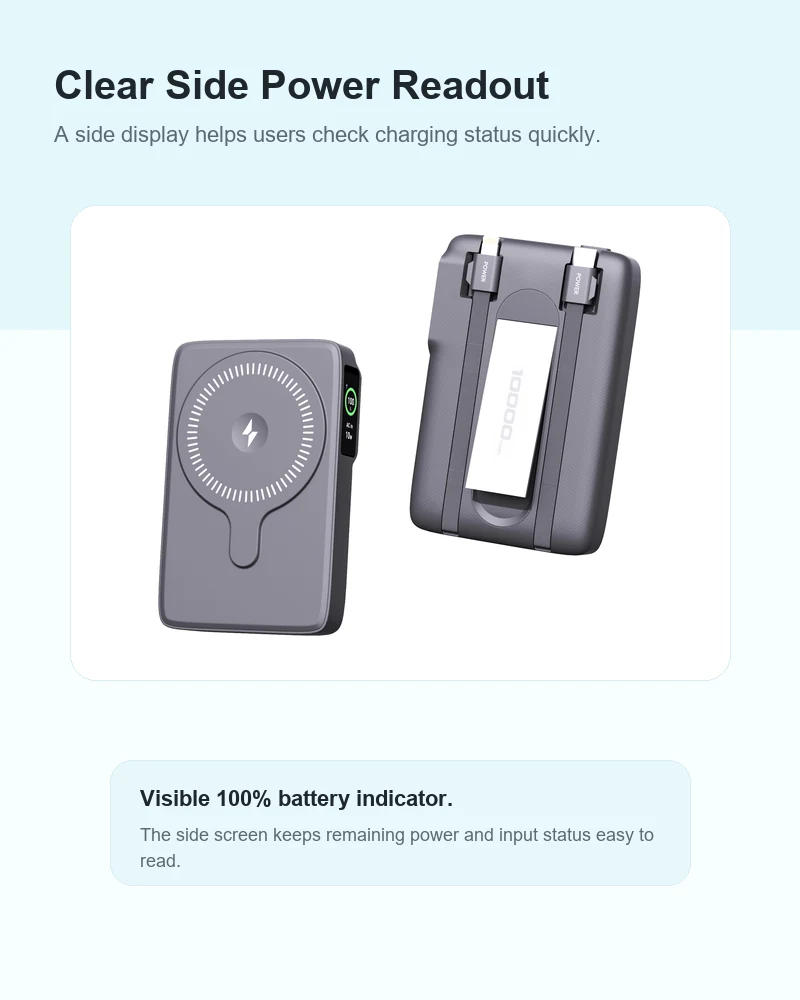
- Physical features: ABS housing, side power readout, cable storage, and stand mode.
- OEM order tiers: 500, 1000, and 2000 pieces, subject to the approved quotation and project scope.
Published Technical Specifications
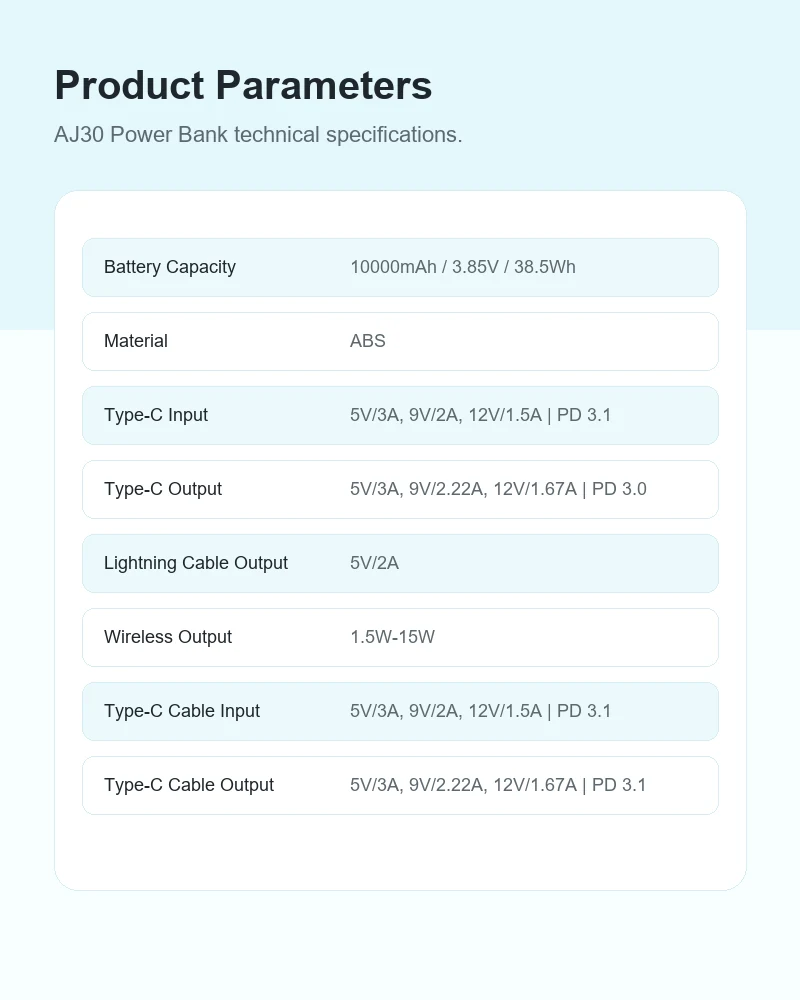
| Specification | Published AJ30 Data |
|---|---|
| Item No. | AJ30 Power Bank |
| Battery Capacity | 10000mAh / 3.85V / 38.5Wh |
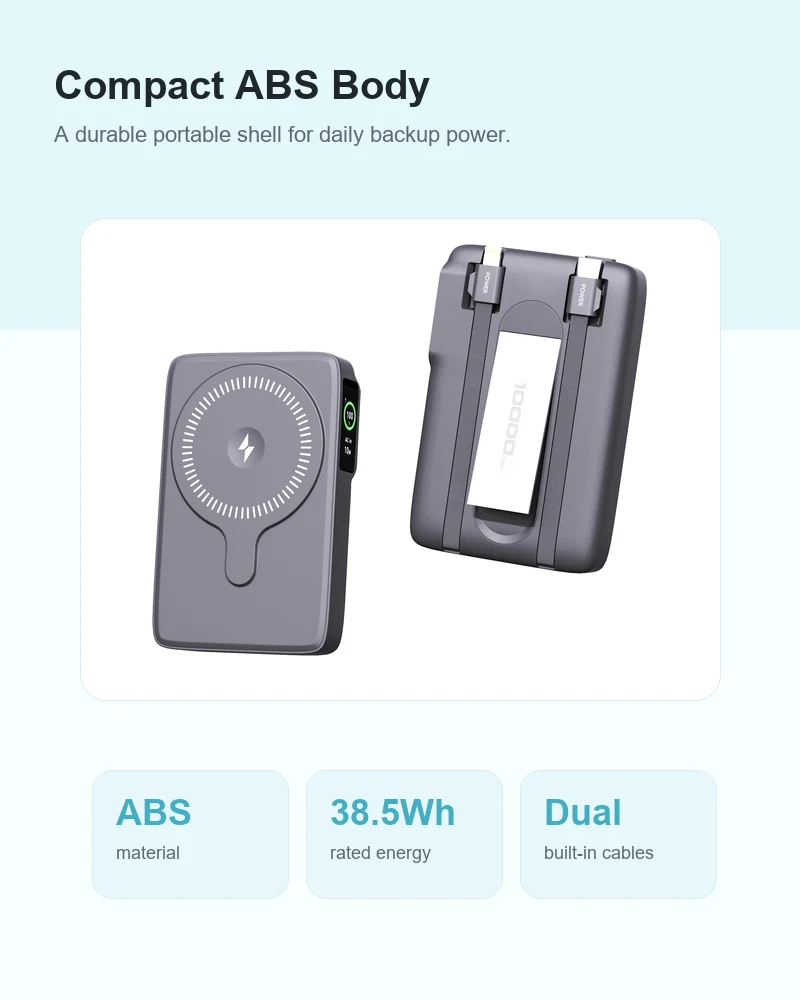
| Material | ABS |
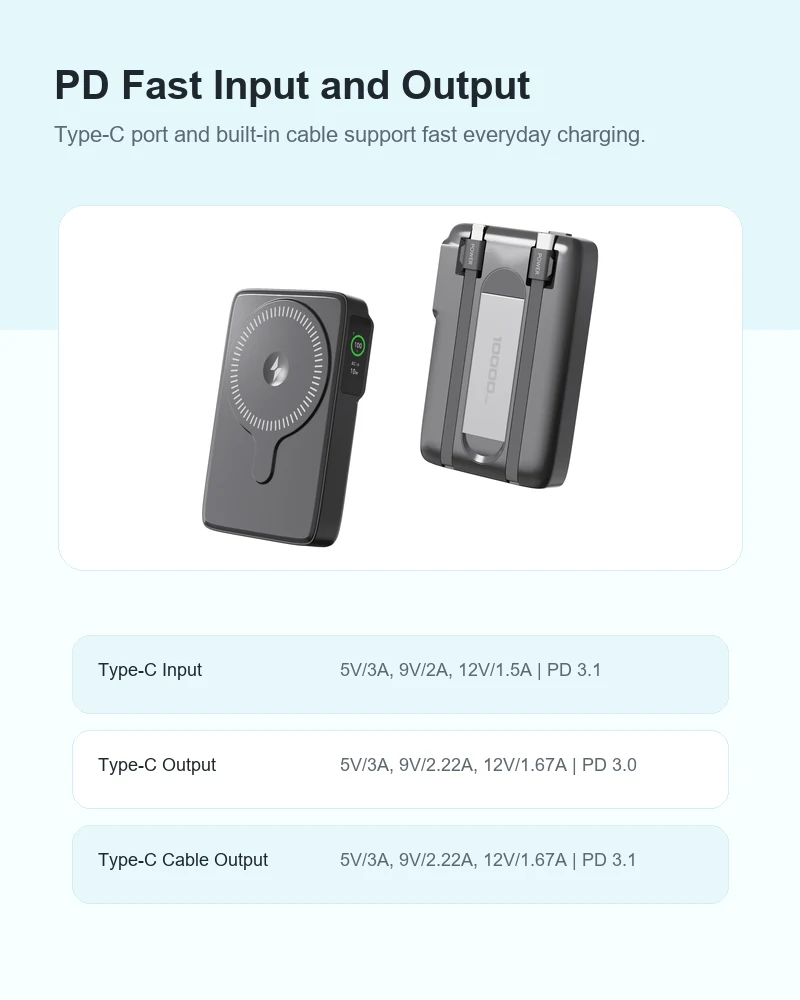
| Type-C Input | 5V/3A, 9V/2A, 12V/1.5A | PD 3.1 label |
| Type-C Output | 5V/3A, 9V/2.22A, 12V/1.67A | PD 3.0 label |
| Lightning Cable Output | 5V/2A |
| Wireless Output | 1.5W-15W |
| Type-C Cable Input | 5V/3A, 9V/2A, 12V/1.5A | PD 3.1 label |
| Type-C Cable Output | 5V/3A, 9V/2.22A, 12V/1.67A | PD 3.1 label |
These are published model figures and labels, not a substitute for the buyer-approved datasheet or protocol evidence. Confirm battery configuration, usable energy, wireless profiles, protocol implementation, cables, test conditions, and final labeling before quotation, mass production, or compliance use.
Magnetic Wireless Charging Verification
The published wireless range is 1.5W-15W, but this does not prove a fixed rate for every device, magnetic compatibility, coil alignment, protocol certification, case compatibility, or performance under simultaneous loads. Buyers should request the wireless controller specification, supported profile matrix, coil and magnet drawings, alignment and retention tests, case-thickness limits, temperature-rise and abnormal-operation data, and results for the exact target phones and cases.
Built-in Type-C and Lightning Cable Verification
The Lightning cable is listed at 5V/2A. The built-in Type-C cable lists input profiles up to 12V/1.5A and output profiles up to 12V/1.67A. These figures do not establish connector authorization, conductor gauge, jacket material, bend life, pull strength, plug-cycle durability, voltage drop, or temperature rise. Request cable drawings, material declarations, connector and electrical specifications, bend, pull and insertion tests, loss and thermal data, and production inspection criteria.
PD Labels, Multi-Output Behavior, and Thermal Checks
The current table applies PD 3.0 and PD 3.1 labels to several Type-C profiles. Buyers should verify these labels with the controller specification, protocol analyzer logs, supported voltage/current matrix, source and sink behavior, and charger/device tests. The individual outputs do not establish total shared power, port priority, or behavior when wireless, Type-C, and Lightning outputs are used together. Request a simultaneous-output matrix, protection thresholds, temperature-rise results, and continuous-load tests.
Stand Mode, Display, ABS Housing, and Rated Energy Approval
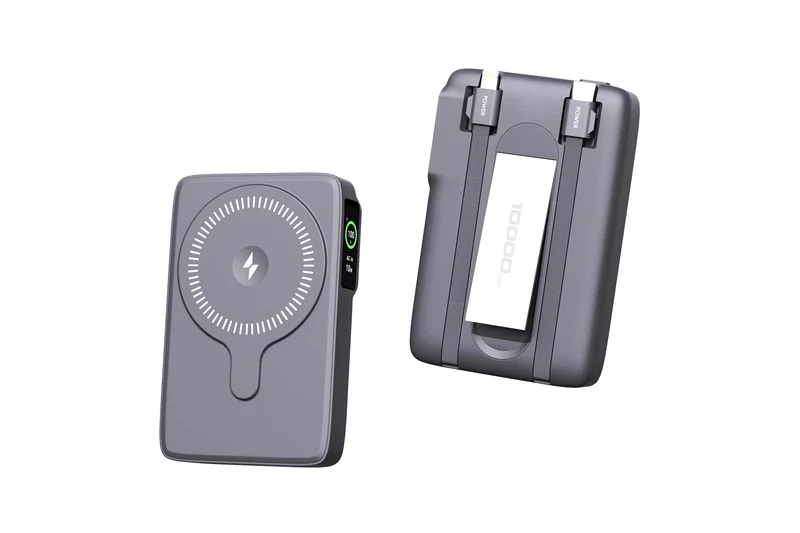
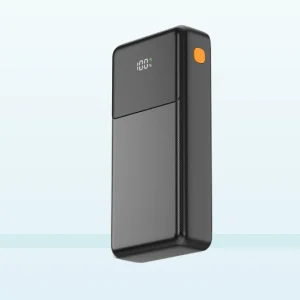
AJ30 product artwork shows an integrated stand arrangement, side power readout, cable storage, and ABS housing. Buyers should confirm supported viewing angles, hinge or stand durability, display content and accuracy, enclosure resin grade, surface finish, dimensions, weight, color standard, and production tolerances. The 38.5Wh label should match the final battery configuration, transport documents, product label, and approved compliance files.
OEM and ODM Quantity Tiers
- 500 pieces: standard OEM logo and packaging on the existing AJ30 platform.
- 1000 pieces: project review for approved housing color, cable finish, documentation, or packaging changes.
- 2000 pieces: deeper ODM review involving the battery, PCBA, firmware, wireless system, magnet or coil layout, cable or connector system, thermal design, stand structure, display, or enclosure.
Final MOQ, scope, samples, tooling, pricing, lead time, compatibility, labeling, certification, warranty, and inspection criteria must be confirmed in the quotation and approved production specification.
B2B Buyer Verification Checklist
- Confirm battery configuration, 38.5Wh rated energy, usable-energy method, conversion efficiency, transport records, and lot-level capacity controls.
- Request wireless profile, magnet, coil, alignment, retention, case, temperature, and protection test evidence.
- Verify Type-C protocol labels with controller data, analyzer logs, charger/device tests, and source/sink behavior.
- Review Lightning and Type-C cable materials, electrical loss, bend, pull, insertion, retention, aging, and inspection criteria.
- Approve shared-power rules, thermal limits, display behavior, stand durability, housing, logo, packaging, labels, compliance scope, and warranty in writing.
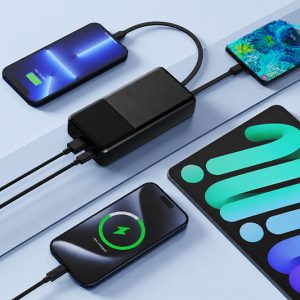
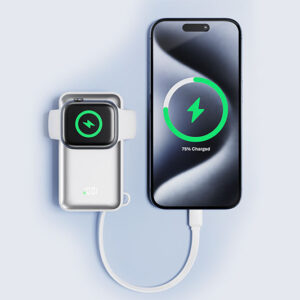
AJ30 Product Images
Frequently Asked Questions: AJ30 Magnetic Wireless Power Bank
1. What specifications are confirmed for the AJ30?
The published AJ30 table lists 10000mAh capacity at 3.85V and 38.5Wh, an ABS housing, Type-C input profiles up to 12V/1.5A, Type-C output profiles up to 12V/1.67A, Lightning cable output at 5V/2A, wireless output from 1.5W to 15W, and built-in Type-C cable input and output profiles. Protocol labels, usable energy, charging time, device-specific performance, and final labeling should be confirmed on the approved production specification and sample.
2. What should buyers verify about AJ30 wireless charging compatibility?
The published 1.5W-15W range does not by itself prove a fixed device charging rate, magnetic compatibility, coil alignment, protocol certification, case compatibility, or support for every phone model. Buyers should request the wireless controller specification, supported profile matrix, coil and magnet drawings, alignment and temperature-rise tests, case-thickness limits, and tests using the exact target devices and cases.
3. What should buyers verify about the built-in Lightning and Type-C cables?
The table lists Lightning cable output at 5V/2A and Type-C cable profiles up to 12V/1.5A input and 12V/1.67A output. These electrical profiles do not establish connector authorization, conductor gauge, jacket material, bend life, pull strength, voltage drop, temperature rise, or plug-cycle durability. Buyers should request cable drawings, material declarations, electrical-loss data, bend and pull tests, connector-wear results, and production inspection procedures.
4. What magnetic attachment evidence should AJ30 buyers request?
The current specification does not publish magnet grade, magnet count, holding force, alignment tolerance, case-thickness limit, drop-test result, or retention performance during movement. Buyers should request the magnet and coil drawing, measured pull-force method and results, alignment tests, temperature data, case-compatibility samples, and retention tests under the intended use conditions before publishing strength or security claims.
5. What simultaneous-output and thermal evidence should buyers request?
The individual port and cable profiles do not establish the power available when wireless, Type-C, and Lightning outputs are used together. The page also does not publish a shared-power limit, port priority, thermal architecture, protection thresholds, or continuous-load result. Buyers should request the simultaneous-output matrix, controller specification, temperature-rise and abnormal-operation tests, protection data, aging procedure, and tests for every required charging combination.
6. What safety, transport, and certification documents should AJ30 buyers verify?
The table lists 38.5Wh, but that figure alone is not evidence of transport approval, market certification, or airline acceptance. Buyers should verify the final cell and battery configuration, rated-energy label, transport test summary, safety reports, shipping documents, packaging and labeling requirements, and current carrier, airline, and target-market rules. Certification scope must match the final battery, PCBA, cables, wireless system, housing, firmware, and branding configuration.
7. What OEM and ODM options are available for the AJ30?
Standard OEM service starts at 500 pieces for logo and packaging on the existing AJ30 platform. Light customization, such as an approved housing color, cable finish, documentation, or packaging change, generally starts at 1,000 pieces. Changes to the battery, PCBA, firmware, wireless system, magnet or coil layout, cable or connector system, thermal design, or enclosure are deeper ODM work and generally start at 2,000 pieces. Final MOQ, samples, colors, tooling, lead time, compatibility, labeling, and certification scope must be confirmed in the quotation.
Reviews
There are no reviews yet.