






Description
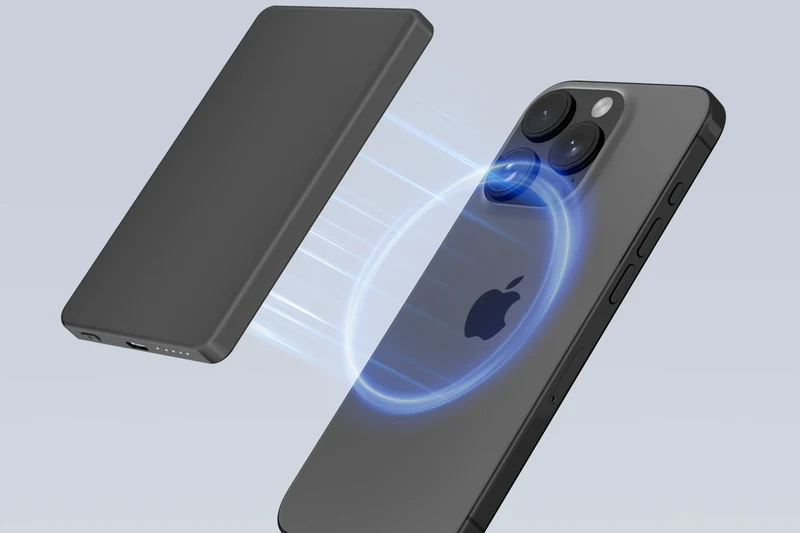
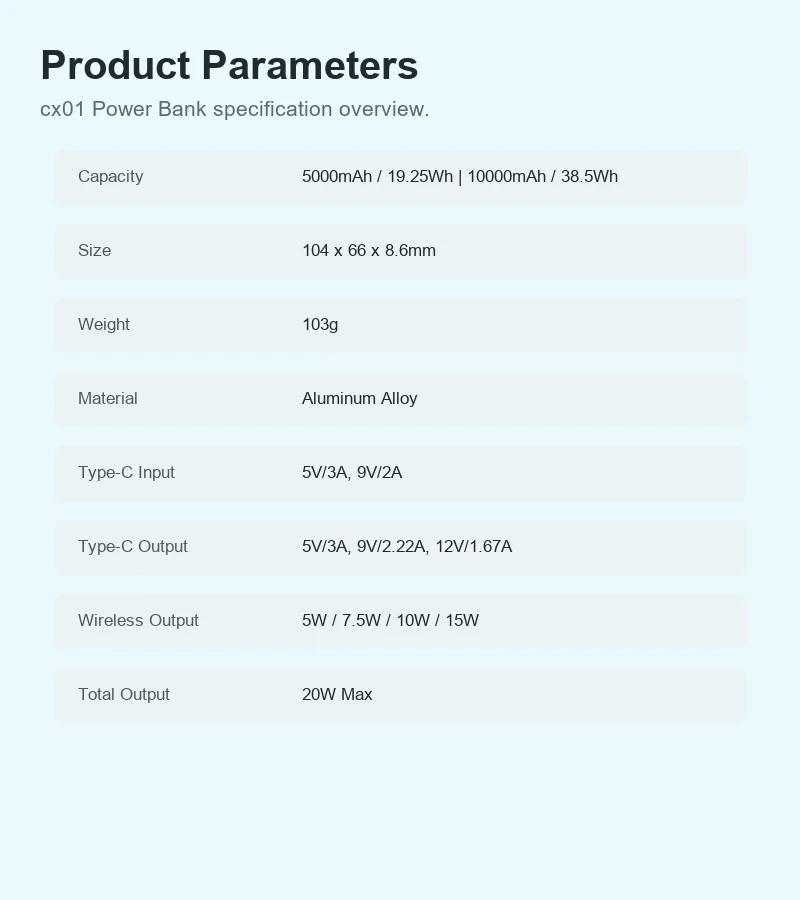
CX01 is a slim aluminum magnetic wireless power bank platform with published 5000mAh / 19.25Wh and 10000mAh / 38.5Wh capacity options. The table also lists a 104 × 66 × 8.6mm body and 103g weight, but it does not assign those physical figures separately to both capacities. Wireless modes are listed at 5W, 7.5W, 10W and 15W, while Type-C output profiles reach 12V/1.67A and total output is stated as 20W maximum. Buyers should confirm version-specific dimensions, weight, cell configuration, protocols, certification, magnetic holding force, case compatibility, output allocation, finish and thermal performance on approved samples and production datasheets.
CX01 Magnetic Wireless Power Bank at a Glance
- Published capacity options: 5000mAh / 19.25Wh and 10000mAh / 38.5Wh.
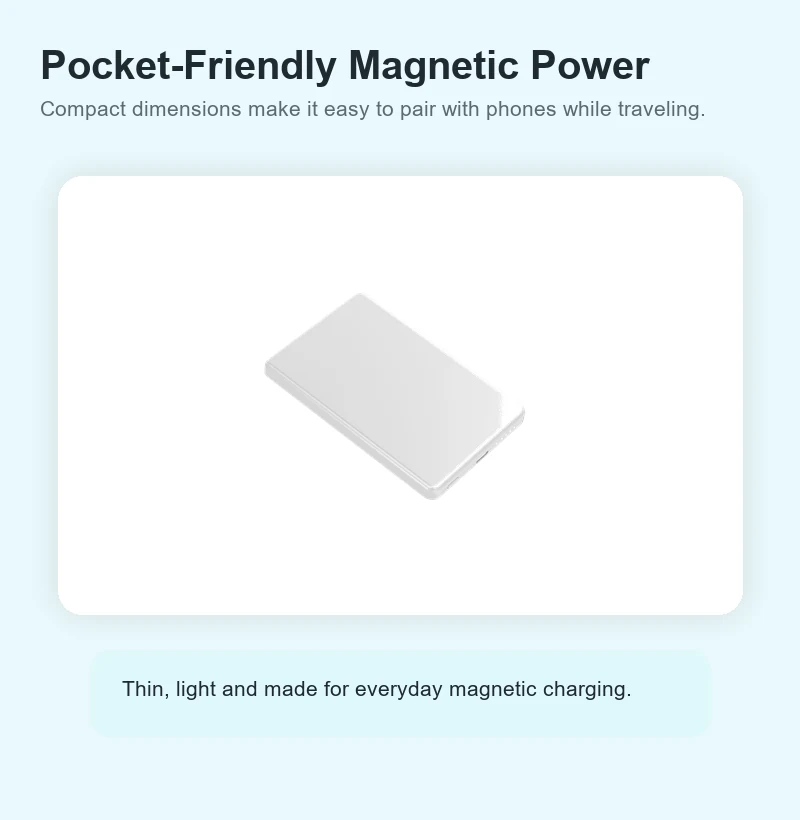
- Published physical data: 104 × 66 × 8.6mm and 103g; confirm which version these values describe.
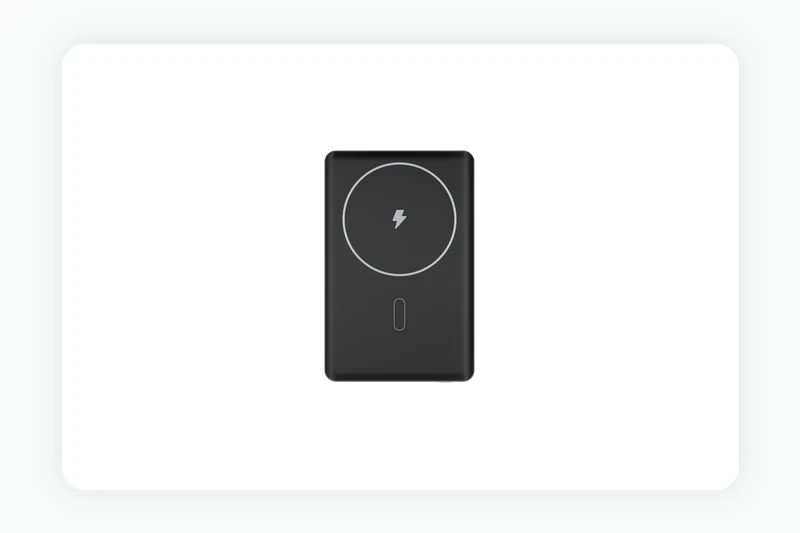
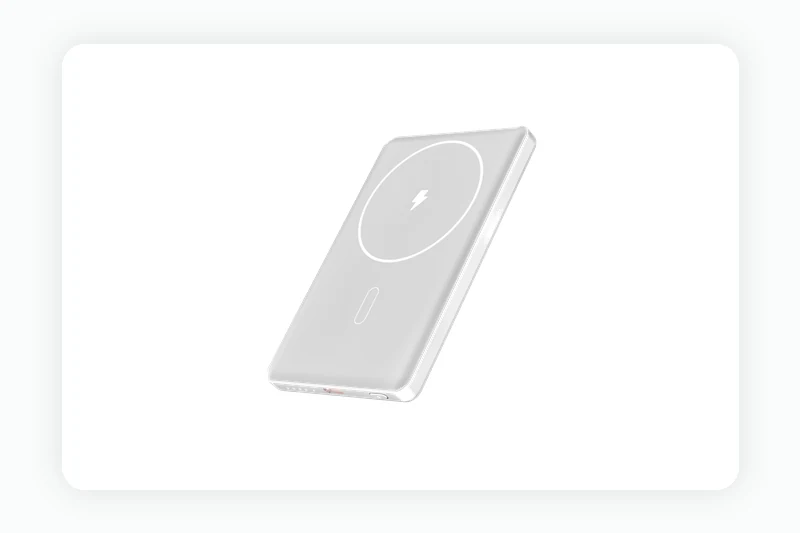
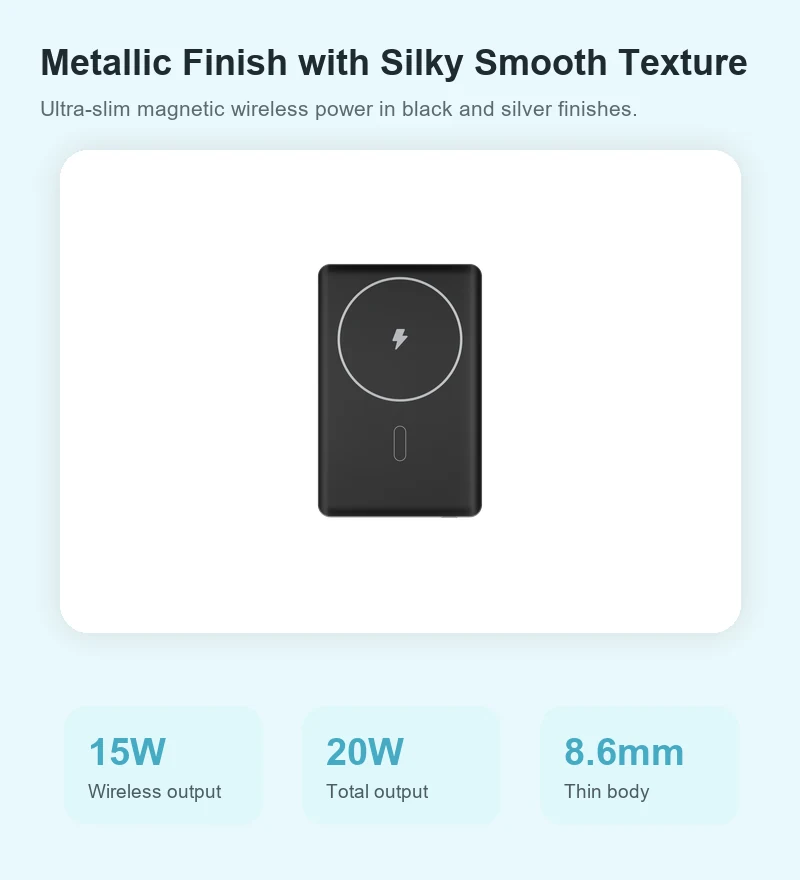
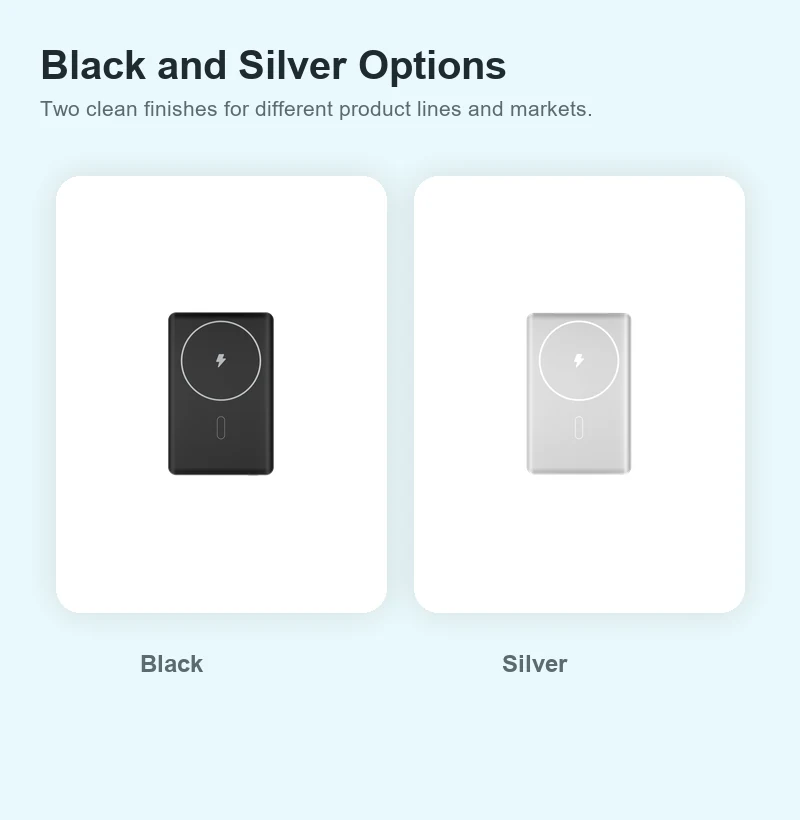
- Housing: aluminum alloy with black and silver finish options.
- Wireless modes: 5W, 7.5W, 10W and 15W.
- Type-C output: profiles up to 12V/1.67A; total output listed at 20W maximum.
- OEM order tiers: 500, 1000 and 2000 pieces, subject to quotation and project scope.
Published Technical Specifications
| Specification | Published CX01 Data |
|---|---|
| Item No. | CX01 |
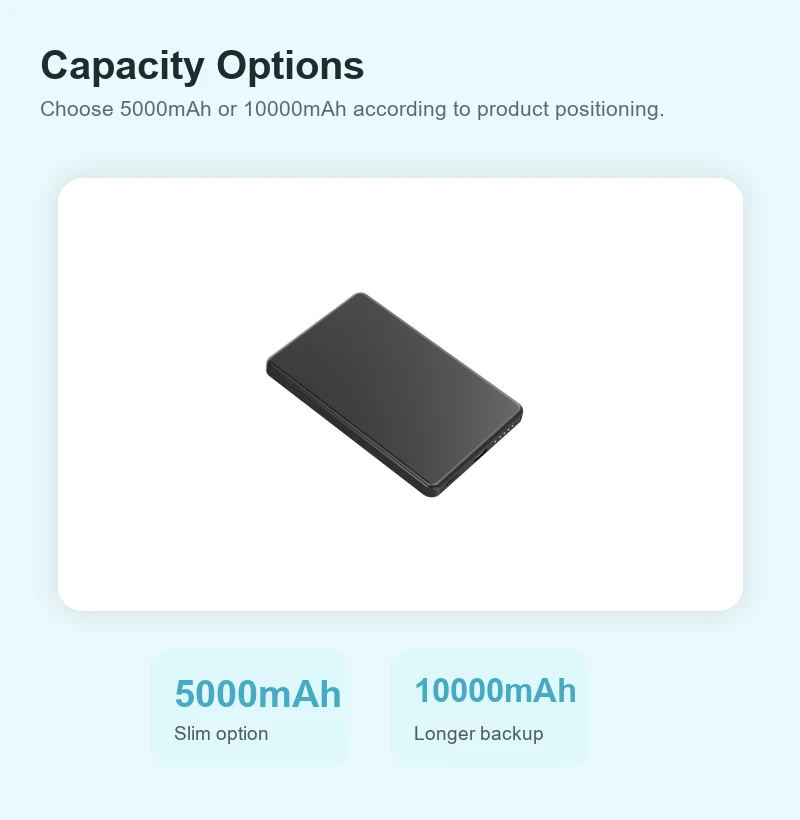
| CX01 Capacity Options | 5000mAh / 19.25Wh; 10000mAh / 38.5Wh |
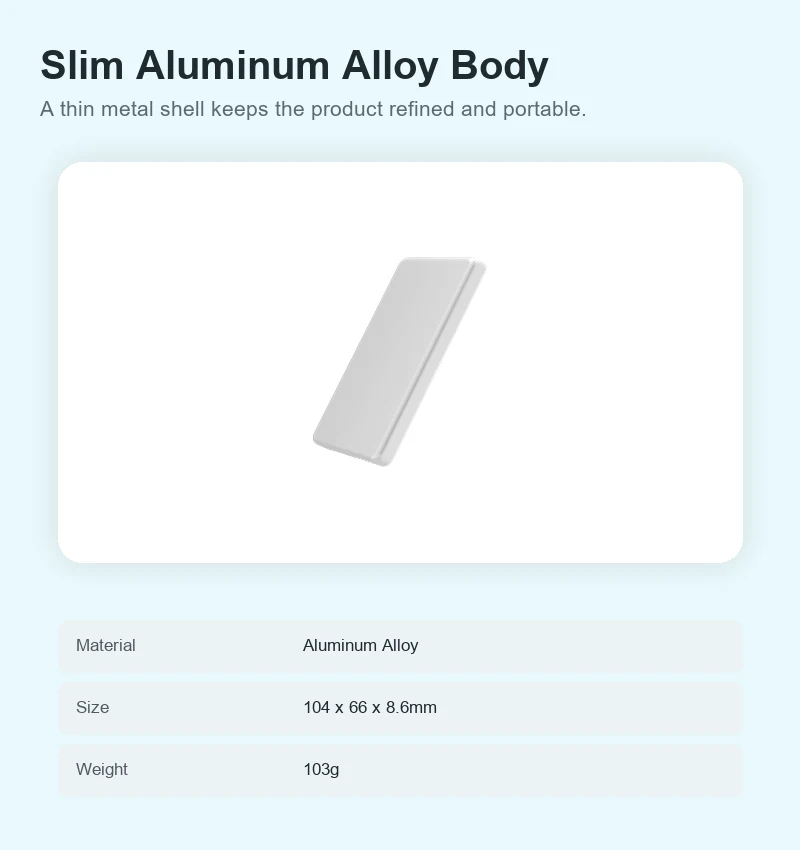
| Published Size | 104 × 66 × 8.6mm; verify by capacity version |
| Published Weight | 103g; verify by capacity version |
| Material | Aluminum Alloy |
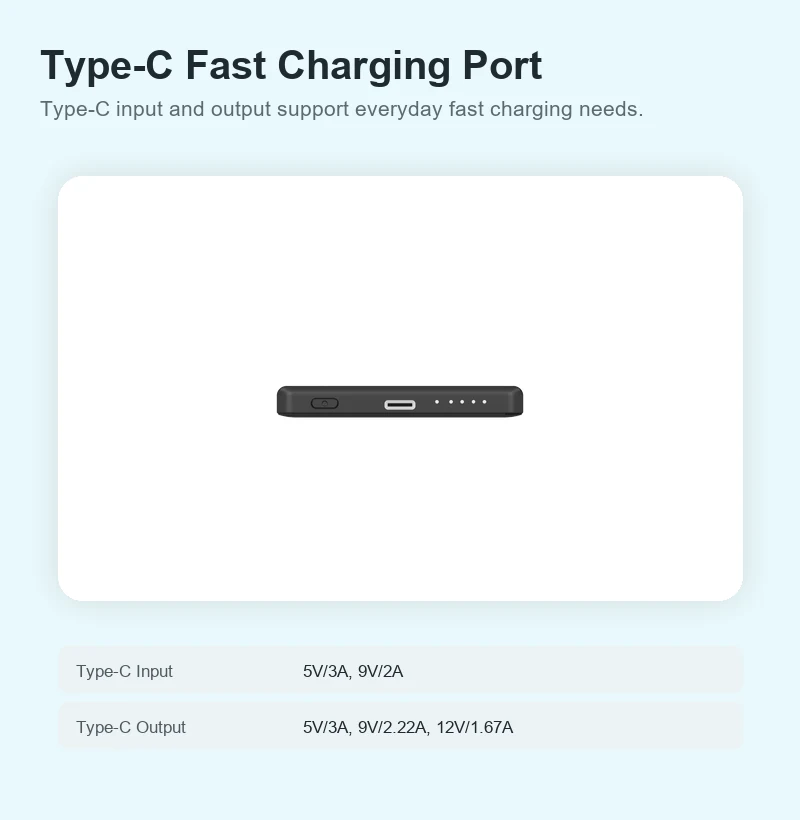
| Type-C Input | 5V/3A, 9V/2A |
| Type-C Output | 5V/3A, 9V/2.22A, 12V/1.67A |
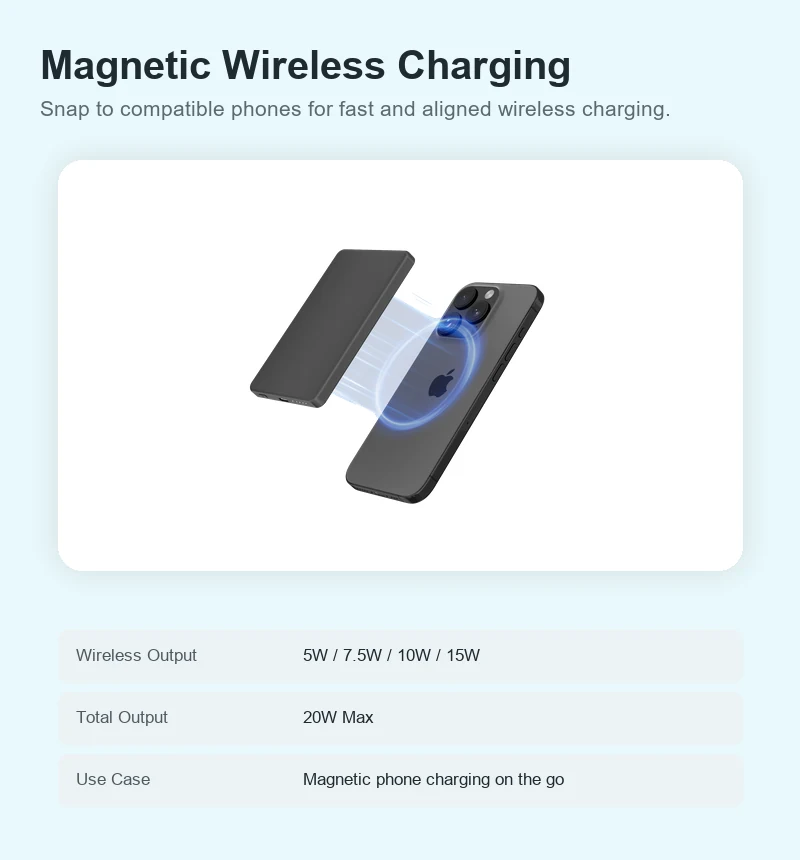
| Wireless Output | 5W / 7.5W / 10W / 15W |
| Total Output | 20W max |
| Published Colors | Black / Silver |
These are published platform figures, not a substitute for a version-specific approved datasheet. Confirm the cell model, capacity, usable energy, dimensions, weight, magnetic system, wireless implementation, protocols, finish, output allocation, test conditions and final label for each selected capacity before quotation or mass production.
Capacity-Version Dimensions and Weight Verification
The page presents two capacity options beside one size and weight. Buyers should not assume that the 5000mAh and 10000mAh versions share the same 8.6mm thickness, 103g weight, cell construction or mechanical drawing. Request a separate specification sheet, measured sample, cell and nameplate data, usable-energy result, packing specification, magnetic layout and temperature test for each capacity. Comparisons such as twice the charge count, identical thickness or identical weight should not be published until both versions are verified.
Magnetic Wireless Charging Verification
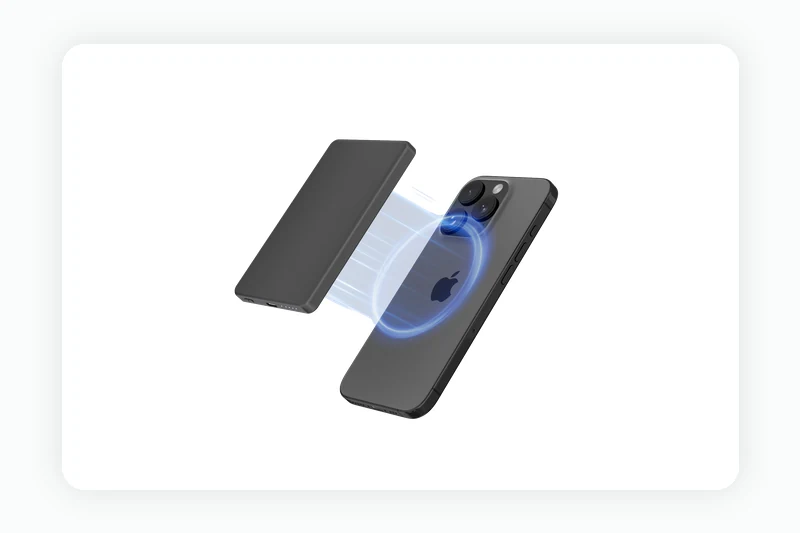
The listed 5W, 7.5W, 10W and 15W levels do not by themselves prove Qi or MagSafe certification, a particular magnet grade, universal case compatibility, fixed 15W performance, alignment tolerance or holding force. Buyers should request the wireless controller specification, supported profile matrix, coil and magnet drawings, alignment and pull-force tests, foreign-object and abnormal-operation protection data, case-thickness limits, efficiency and temperature-rise results, and tests using the exact target phones and cases.
Type-C Profiles and 20W Total Output
Type-C input is listed at 5V/3A and 9V/2A, while output profiles are 5V/3A, 9V/2.22A and 12V/1.67A. These electrical values do not by themselves prove a named protocol, universal device compatibility or a fixed recharge time. Buyers should request controller data, protocol analyzer logs, charger and device tests, recharge curves, voltage stability, protection thresholds and simultaneous wired-and-wireless allocation. The 20W figure should be treated as maximum total output, not added to wireless power as a guaranteed combined result.
Aluminum Housing, Finish and Thermal Evidence
Aluminum-alloy construction and black or silver finishes are published, but the material alone does not prove improved wireless efficiency, a specific cooling rate, scratch resistance, fingerprint resistance or a fixed surface temperature. Buyers should request the alloy and insulation specification, coil shielding and thermal interface design, surface-treatment process, approved color samples, adhesion and abrasion tests, corrosion evidence where required, sustained wired and wireless temperature data, drop results and cosmetic acceptance limits.
OEM and ODM Quantity Tiers
- 500 pieces: standard OEM logo and packaging on the existing CX01 platform.
- 1000 pieces: project review for an approved shell color, documentation or packaging change.
- 2000 pieces: deeper ODM review involving the wireless module, magnet system, battery, PCBA, firmware, thermal design, connector system or structure.
Final MOQ, capacity option, color and packaging feasibility, samples, tooling, pricing, lead time, protocol scope, labeling, certification, warranty and inspection criteria must be confirmed in the quotation and approved production specification.
B2B Buyer Verification Checklist
- Obtain separate approved specifications, samples, weights, dimensions and labels for the 5000mAh and 10000mAh versions.
- Confirm cell data, published watt-hours, usable-output method, conversion efficiency and lot-level capacity controls.
- Request wireless controller, coil, magnet, alignment, pull-force, case, protection and temperature evidence.
- Verify Type-C profiles and the 20W total-output rule with protocol logs, charger tests and target-device tests.
- Approve the aluminum grade, insulation, finish process, color, scratch, corrosion, thermal and cosmetic criteria.
- Define logo, packaging, manuals, accessories, compliance scope, warranty and inspection requirements in writing.
CX01 Product Images
Frequently Asked Questions: CX01 Slim Magnetic Wireless Power Bank
1. What specifications are confirmed for the CX01?
The published CX01 specification lists 5000mAh / 19.25Wh and 10000mAh / 38.5Wh capacity options, a 104 × 66 × 8.6mm size, 103g weight, aluminum-alloy material, Type-C input profiles up to 9V/2A, Type-C output profiles up to 12V/1.67A, wireless output levels from 5W to 15W and a 20W maximum total output. Because two capacities are shown alongside one size and weight, buyers should confirm the mechanical dimensions, weight, cell configuration and labeling for each selected version.
2. How should buyers compare the two CX01 capacity versions?
The current page confirms two capacity and energy options but does not publish separate drawings, weights, thicknesses, cell models or usable-output measurements for both versions. Buyers should request an approved specification sheet and physical sample for each capacity, including dimensions, weight, cell and nameplate data, magnetic layout, temperature results and measured discharge energy. Charge-count or size comparisons should not be published until both versions are verified.
3. What is confirmed about CX01 magnetic and wireless charging?
The published specification lists wireless output levels of 5W, 7.5W, 10W and 15W, but it does not publish verified wireless-protocol certification, magnetic alignment standard, magnet grade, holding force, case-thickness limit or device-specific charging speed. Buyers should request the wireless module specification, applicable certification evidence, coil and magnet layout, alignment tolerance, foreign-object detection, efficiency and temperature-rise data, and target-device test results.
4. How does the aluminum-alloy body affect performance?
Aluminum-alloy housing is confirmed, but the material alone does not prove improved wireless efficiency, a specific heat-dissipation rate or resistance to thermal throttling. Performance depends on the complete mechanical and electrical design, including coil placement, shielding, cell spacing, thermal interfaces, firmware and ambient conditions. Buyers should request wireless-efficiency, surface-temperature, internal-temperature, sustained-load, drop and enclosure-safety test results for the final construction.
5. What is confirmed about CX01 Type-C input and output?
The Type-C input lists 5V/3A and 9V/2A profiles, while the output lists 5V/3A, 9V/2.22A and 12V/1.67A profiles with a 20W maximum. These voltage and current values do not by themselves confirm a named fast-charging protocol, universal device compatibility or a full-recharge time. Buyers should verify protocol negotiation, charger and cable requirements, target-device behavior, recharge curves, temperature rise and simultaneous wired/wireless power allocation on the approved sample.
6. What should buyers confirm for CX01 colors and surface finish?
The page lists black and silver finish options but does not publish the surface-treatment process, coating thickness, hardness, scratch resistance, fingerprint resistance, salt-spray result, color tolerance or sunlight-temperature comparison. Buyers should request approved color samples, process specifications, adhesion and abrasion testing, corrosion testing where required, cosmetic acceptance limits, logo-process samples and packaging-protection requirements before approving mass production.
7. What OEM and ODM options are available for the CX01?
Standard OEM service starts at 500 pieces for logo and packaging on the existing CX01 platform. Light customization, such as an approved shell color, documentation or packaging change, generally starts at 1000 pieces. Wireless module, magnet system, battery, PCBA, firmware, thermal design, connector system or structural changes are deeper ODM work and generally start at 2000 pieces. Final MOQ, capacity option, color and packaging feasibility, samples, tooling, lead time and certification scope must be confirmed in the quotation.
Reviews
There are no reviews yet.