






How to Qualify a Backup Power Bank Manufacturer Before a Supply Disruption
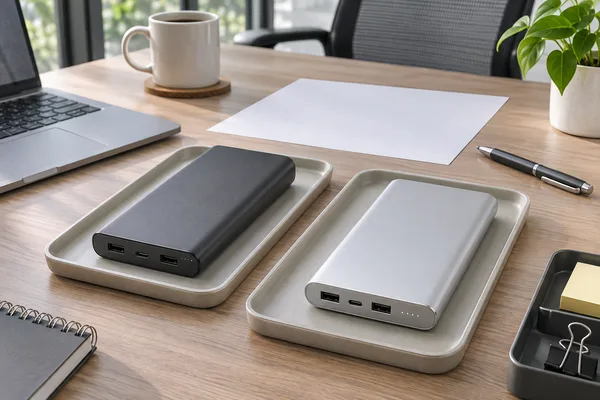
Qualify a backup power bank manufacturer while your main supplier is still shipping. Give both factories the same customer requirements, but approve the backup factory’s actual build, supporting documents and production sample separately. A quote and a look-alike sample do not tell you whether the second factory can take a live order.
If you already have a primary supplier, start with the disruption you need the second factory to cover. A delay at final assembly calls for a different backup plan than a shortage of a battery pack both factories use.
Choose what the second factory needs to replace
Pick the SKU you can least afford to run out of. Write down what customers must receive: usable energy under the stated test conditions, USB-C output, any advertised wireless compatibility, dimensions and the items in the box. Separate those requirements from choices the alternate factory can make, such as the device’s enclosure or how its display is arranged.
Your backup does not necessarily need to make an identical product. For a private-label accessory, an approved substitute with its own model and customer-facing description may be easier to qualify than a copy of a custom design. If the product has to fit an existing case, retail insert or installation, check those interfaces before committing. Do not hand a new supplier tooling files or firmware unless you have confirmed that you may share them.
Find out whether the supply routes are independent
NIST’s Manufacturing Extension Partnership identifies secondary suppliers as one option alongside safety stock in a supply risk plan. The U.S. Commerce Department’s supply chain review also describes the value of mapping lower-tier dependencies in electronics supply chains. Use that approach to see whether your alternate reduces the particular risk you identified.
Ask each factory which site would build the product and what happens if the approved battery or charging board is unavailable. Different factory addresses do not settle the question. Suppose the main factory misses a delivery because its approved battery pack is unavailable. If the alternate needs the same pack from the same plant, a second purchase order may not recover any time. If late assembly at the main factory is the risk, the alternate might still help. Record what the backup covers and what it leaves exposed.
Approve the alternate build on its own record
Use the same buyer performance criteria for both factories where the products are supposed to be interchangeable. Tag the alternate’s sample with its exact build and compare it with the purchase specification. Ask which factory, battery configuration and finished model the document set identifies. The power bank sample approval guide covers that evaluation in more detail. Keep the approval for each factory separate, even if both models pass the same comparison.
PHMSA’s lithium-battery transport guidance describes how the UN 38.3 test summary links transport test information to the battery design. Ask a qualified reviewer to check the actual alternate model, battery configuration, shipping route and applicable documentation. A test summary for the incumbent is not proof of coverage for the alternate. For any wireless model marketed as Qi certified, check the exact product identity against the Wireless Power Consortium product database before approving that claim.
Decide when the alternate is ready to take an order
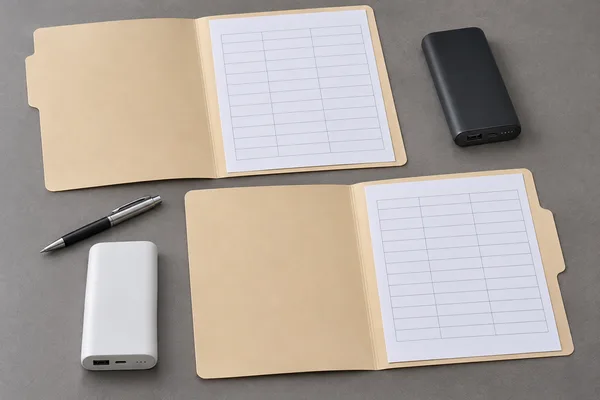
Keep the alternate listed as a prospect until there is evidence it can deliver the approved build. Use this table to record where it stands. Set the timing and evidence to suit the SKU; there is no universal trial quantity or switching threshold.
| Status | Evidence to keep | What to do next |
|---|---|---|
| Candidate | Factory and proposed model, quote, known common dependencies | Request a sample and resolve missing information. |
| Sample approved | Identified alternate build, agreed results and document review | Confirm pilot timing and how finished units will be identified. |
| Pilot accepted | Accepted lot record, matching packing and stock records, switch contact | Confirm current availability before offering the alternate to sales. |
| On hold | Changed site, design, evidence or unresolved discrepancy | Agree what must be checked again before releasing an order. |
Name the person who can switch a purchase order. Give them a trigger they can check. One buyer may trigger a review when the incumbent misses a confirmed ship date and buffer stock will not cover the alternate’s verified lead time. Another may schedule a small repeat order to avoid leaving an older sample untested for years. Before placing the order, confirm the supplier can make the approved revision and give you a ship date. A price from six months ago does not reserve a production slot.
Keep each source identifiable after delivery
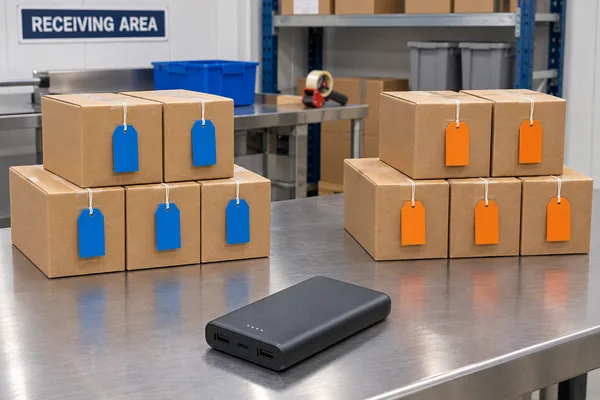
Set up the warehouse and support records before both suppliers ship. If units from both sources carry the same retail branding, agree how receiving staff distinguish the builds and how support traces a return. Keep the purchase order, production lot, revision and shipment together. The batch traceability guide explains which identifiers to request. Avoid promising a replacement from either source until you know the two products work for the same advertised use.
When discussing a backup build with YULIDA’s OEM/ODM team, send the customer-critical specifications, current model constraints, destination, expected volume and the date you would need a first shipment. Say which changes are acceptable. Ask which existing model or proposed alternate build can be sampled and what evidence would still be needed before you could switch.
Frequently asked questions
1. When should I qualify a backup power bank manufacturer?
Start while the primary supplier is still delivering. Leave time to review the actual alternate build, test a sample against your requirements and agree how to identify the first lot.
2. Does a backup factory need to make the same power bank?
Not always. It needs to satisfy the customer requirements you intend to retain. Differences in fit, functions, packaging or model identity may require an approved substitute with its own description.
3. How can two factories share the same supply risk?
They may rely on the same approved battery pack, component plant or outsourced process. Compare their dependencies against the specific interruption you are trying to cover.
4. Can the alternate use the primary supplier’s test reports?
Do not assume so. Ask a qualified reviewer to check whether the report applies to the alternate build and claim. Verify the model, battery configuration and other identifiers relevant to that evidence.
5. Is an approved sample enough to switch an order?
It confirms only the sample and criteria you reviewed. Check whether the factory can still supply that version. Compare the pilot lot and packing records with your approval, and confirm the current ship date.
6. Should buyers split all orders between the two manufacturers?
Not necessarily. Compare the cost of keeping the alternate current with the disruption it can cover. Decide whether a planned pilot, occasional order or ongoing split best fits your SKU.
7. Can stock from both factories share the same retail branding?
That is a separate approval decision. Make sure the buyer-facing claims fit each build and that receiving and support can still trace the source and lot.
8. What should I send with a second-source enquiry?
Send the must-match specifications, acceptable changes, destination, expected order volume and the date you need a first shipment. Ask what build can be sampled and what evidence can be provided.
Official sources and verification
These primary sources support standards, compatibility, safety, or transport statements discussed in this article. Confirm the current requirement for the exact product model and destination market.
- U.S. PHMSA — Hazardous-materials and lithium-battery transport information.
- Wireless Power Consortium — Qi and Qi2 standards, certification, and wireless-charging information.
