







How to Source a Magnetic Power Bank and Phone Case Bundle: A Private-Label Buyer’s Guide
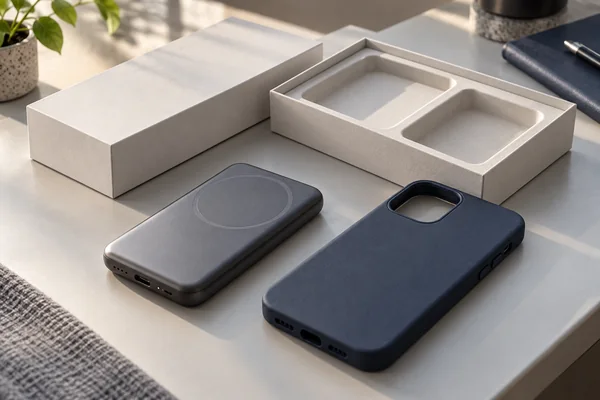
To source a magnetic power bank and phone case bundle, define each retail SKU as a specific phone, case and power-bank combination. Obtain separate quotations from the two suppliers, approve the combination on physical samples, and assign responsibility for packing, inspection, stock reconciliation and returns before production. Record those responsibilities alongside the two purchase orders.
This guide is for private-label brands and distributors buying the power bank and case separately. The focus is the work between the suppliers: matching quantities, approving the assembled setup and keeping the right components together through delivery and replenishment.
Decide what the customer will actually receive
A prepacked kit and a website bundle create different purchasing requirements. In a prepacked kit, someone must receive both components, assemble the pack and check the contents. In a website bundle, the warehouse may pick two separately stocked items for each order. Decide which arrangement you need before asking for packaging prices.
| Buying arrangement | What needs agreement | Inventory consequence |
|---|---|---|
| Prepacked retail kit | Final pack dimensions, assembly location, pack contents and release inspection | Stock is tied to a particular case and power-bank pairing |
| Separately packed items sold together | Order-to-SKU mapping, picking checks and customer-facing compatibility description | Components can be replenished separately, subject to the approved pairing |
| Optional case add-on | Which case choices are approved for each power bank and phone | Case demand may differ from power-bank demand; do not order every variant equally without evidence |
Build the SKU matrix before comparing quotations
Start with a small, explicit device list rather than "for iPhone and Android." The case needs an exact handset reference. The power bank needs a supplier model, capacity and configuration. Record the version of each component so a later substitution is visible.
| ما يُدوَّن | What belongs in it | Why the buyer needs it |
|---|---|---|
| Retail bundle SKU | Your item code and customer-facing product name | Connects the order, listing and returns record |
| Phone reference | Exact device model and any relevant regional or size variant | Prevents approval against a similar-looking handset |
| Case reference | Supplier, series, device fit, color and specification revision | Separates variants that may look alike in a photograph |
| Power-bank reference | Supplier model, capacity/Wh, finish and approved configuration | Identifies the unit covered by the sample and documents |
| Order quantities | Required sellable kits plus separately agreed sample, replacement and spare quantities | Reconciles the two purchase orders |
| Release record | Sample IDs, approval date, packaging revision and responsible person | Defines what the packing team is allowed to ship |
For the case side, DUX DUCIS magnetic phone cases can be shortlisted by device and required features. Use the exact device and case reference when asking about a potential bundle component. Catalog availability does not establish that a case has been tested with your selected power bank.
Send each supplier the same combination brief
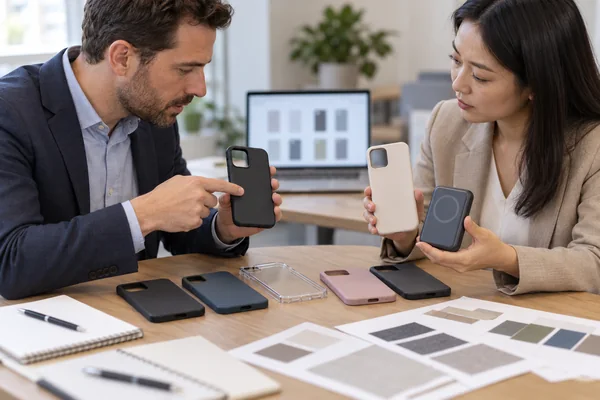
The two RFQs can have different technical sections, but both should identify the intended phone, case and power bank. Otherwise, each supplier may quote a reasonable product without seeing the combination you plan to sell.
The power-bank brief
Specify capacity/Wh, input and output requirements, ports, target phones, intended cases, branding and destination. Request the exact production configuration and the evidence supporting any charging or certification claims. YULIDA’s خدماتنا لبنوك الطاقة بنظامَي OEM/ODM cover branding and packaging on existing models as well as more extensive customization; the scope depends on the project. Ask separately whether any proposed kit assembly is available and included.
The case brief
Send the exact handset list, case references, quantities by model and color, material preferences, logo artwork and packaging requirements. Include the power bank’s dimensions and a physical sample at the agreed review stage. The DUX DUCIS phone case OEM/ODM options describe custom manufacturing, private-label and wholesale project paths. Confirm the available changes for the selected case rather than assuming every design supports the same branding treatment.
Approach the two suppliers separately. Any kit assembly or combination testing needs its own agreed scope; the product and service pages do not establish a jointly supplied bundle.
Reconcile quantities instead of matching headline MOQs
Ask what each minimum applies to: the whole order, one model, one color, a printing run or custom packaging. Two suppliers quoting the same starting quantity can still leave you with incompatible purchasing commitments.
Send both suppliers your quantity breakdown and ask which variants can be combined in one order. Have each quotation identify any separate minimum for branding or packaging. A mixing policy offered by one supplier does not set the terms of the other purchase order.
Hypothetical example: a buyer plans 500 kits using one power-bank configuration and two phone-specific cases: 300 of case A and 200 of case B. If only 280 A cases and all 200 B cases are accepted at inspection, the available stock supports 480 complete kits, leaving 20 power banks unmatched. Decide beforehand whether to hold those units, sell them separately or wait for replacement cases. This example illustrates stock reconciliation, not either supplier’s production results.
Assign the work between the two purchase orders
Name one person at the brand or importer who can approve the finished bundle and stop release when a component changes. The packing facility needs a clear decision-maker when parts arrive with an unexpected revision or mismatched labels.
| Task | Responsibility to assign in writing | Release evidence |
|---|---|---|
| Component supply | Each supplier identifies its own model, specification and approved changes | Approved component sample and purchase-order reference |
| Combination review | Buyer or designated reviewer checks the exact phone, case and power bank together | Dated combination-level approval record |
| تغليف البيع بالتجزئة | Named packaging supplier or assembler owns artwork, inserts and content mapping | Approved packed sample and revision |
| Receiving and assembly | Named facility checks incoming counts, identities and condition | Receipt records, pack counts and discrepancy log |
| Final release | Buyer or authorized inspector checks the finished order against agreed criteria | Inspection record tied to the bundle SKUs |
| Returns and changes | Buyer coordinates fault investigation and decides which approvals must be repeated | Component lot references and corrective-action record |
Ask who bears the cost of rework, replacement freight and incomplete kits if one component arrives late or fails inspection. Avoid leaving that conversation until the packing line is waiting.
Approve the combined sample before printing the compatibility claim
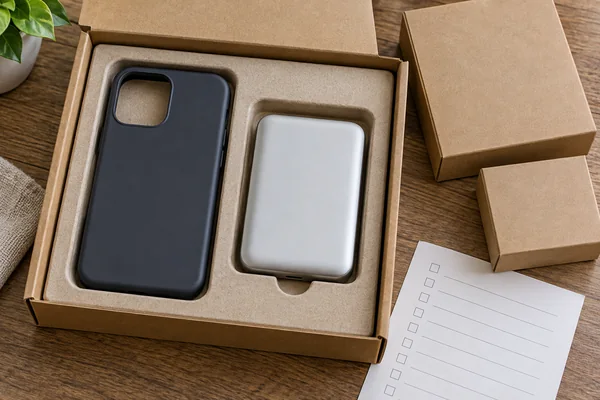
Review fit and camera clearance, access to buttons and connectors, attachment during intended handling, and charging behavior with the selected case installed. Include stand movement or other features where relevant. Agree test conditions and acceptance criteria before judging the result.
Use the existing Samsung magnetic power bank compatibility checklist for Samsung-specific review points. Put the result on the bundle approval record, with both supplier references and the packaging revision.
Retain the approved samples and record what was actually checked. If the case construction, magnetic arrangement, power-bank housing or charging configuration changes, review the affected pairing before releasing more kits. A general "magnetic" description is not evidence for every phone and accessory combination.
Plan replenishment and returns at component level
Case variants may sell at different rates. Track the case SKU and power-bank SKU separately even if the customer sees one bundle code. This lets the purchasing team replenish the constrained component instead of automatically buying another full assortment.
For a return, record the handset, case reference, power-bank reference, lot information and reported symptom. A fit complaint, incorrect item in the box and charging interruption need different investigations. Preserve the returned combination where practical; replacing one component before recording it can make the problem harder to reproduce.
Agree the claim window, evidence required, replacement route and cost allocation with each supplier. Do not advertise a combined warranty until the party responsible for that promise has approved its terms.
الأسئلة الشائعة
1. Can I buy the power bank and phone case from different suppliers?
Yes, but the buyer needs to coordinate the finished offer. Put the exact component references on a shared SKU matrix, review samples together and name the party responsible for packing and final release. Separate supplier approval does not replace combination approval.
2. Does a magnetic case guarantee that the bundle will charge wirelessly?
No. Confirm that the phone supports the intended charging method and check the actual phone, case and power bank together. Magnetic attachment alone does not demonstrate charging performance. Keep the approved product description within the evidence for that combination.
3. Should I order the same number of cases and power banks?
For a one-case, one-power-bank kit, accepted sellable quantities need to match by approved pairing. Purchase quantities may differ if you agree separate samples, spares or replacement stock. Reconcile accepted quantities after inspection, not only the numbers originally ordered.
4. Who should assemble the finished retail kit?
The buyer can ask a component supplier, a designated packer or its own warehouse to quote the work. Confirm that the chosen facility accepts the assignment and can identify both components correctly. Include receiving checks, assembly instructions, stock reporting and final inspection in the scope.
5. Can one power-bank model be used across several case SKUs?
Potentially, but approve each intended phone-and-case pairing rather than transferring the first result to the whole assortment. The SKU matrix should show which combinations are released and which are still awaiting review. Unapproved pairings should not appear as selectable bundle options.
6. Can I reuse one packaging design for every phone model?
You can discuss a shared layout with the packaging supplier, but the pack must still identify the correct contents and supported device. Check the item code, device name, labels, inserts and any compatibility statements for each variant. Approve a physical packed sample where dimensions or inserts change.
7. Does putting a phone case beside a power bank change shipping requirements?
Do not assume that adding a case removes battery-related shipping requirements. Give the freight provider the actual power-bank specification, packing arrangement, quantities and route for review. Keep transport documentation and acceptance separate from the commercial decision to sell two items as a bundle.
8. What should trigger a new sample approval?
A change affecting fit, attachment, charging, appearance or packing should be reviewed before release. Examples include a different case construction, a revised power-bank configuration or a new packaging insert. Record the change, assess which checks it affects and preserve the earlier approval history.
Prepare one bundle brief, then request two scoped quotations
Start with the exact devices, proposed case references, power-bank requirements and quantities by retail SKU. Add the packaging arrangement, intended market, required arrival date and named approval owner. Request separate quotations that refer to this shared brief, then reconcile the scope before ordering samples.
For the power-bank component, send YULIDA the brief through its OEM/ODM enquiry route. Keep the case quotation and any assembly proposal separate until the responsibilities, samples and final configuration have been agreed.
