







Que doit contenir un contrat de fabrication OEM de batteries externes ?
Un contrat de fabrication OEM de batteries externes doit identifier le produit exact et les composants approuvés, puis fixer les règles relatives aux échantillons, à l’autorisation de production, aux modifications techniques et au contrôle qualité. Il doit aussi couvrir les documents de conformité, le prix, le paiement, la livraison, les outillages, la propriété intellectuelle, les demandes de garantie et les recours. Consignez les détails techniques dans des spécifications et des fichiers graphiques maîtrisés plutôt que de les condenser dans une seule clause commerciale.
Le contrat devient particulièrement utile lorsque la commande ne se déroule plus comme prévu. L’usine peut-elle remplacer une cellule de batterie ? Qui approuve une révision du micrologiciel ? Qui paie les reprises après une inspection non conforme ? À quelle partie appartiennent le moule et les fichiers sources ? Un devis répond rarement à ces questions.
La liste ci-dessous sert à la planification commerciale et qualité en B2B. Ce n’est ni un modèle de contrat ni un conseil juridique. Le droit de la vente internationale, la responsabilité du fait des produits, les sanctions, les règles douanières et le caractère exécutoire du contrat dépendent des parties, des marchés et du droit applicable. Un conseil juridique qualifié doit examiner le contrat définitif.
En quoi un contrat de fabrication diffère-t-il d’un devis ?
Un devis consigne le prix et les hypothèses commerciales. Un bon de commande porte sur une quantité définie. Les spécifications décrivent le produit. Le contrat de fabrication fixe les règles applicables au développement, aux commandes répétées, aux modifications, aux défaillances et à la résiliation.
| Document | Objectif principal | Contenu habituel |
|---|---|---|
| Contrat de fabrication | Règles de la relation commerciale | Responsabilités, maîtrise des modifications, qualité, propriété intellectuelle, garantie, recours et règlement des litiges |
| Bon de commande | Engagement propre à la commande | Modèle, quantité, prix unitaire, date de livraison et condition commerciale |
| Spécifications produit | Définition technique | Batterie, PCBA, ports, profils de charge, matériaux, dimensions et limites de performance |
| Accord qualité ou plan d’inspection | Processus d’acceptation | Essais, tailles d’échantillons, classes de défauts, relevés et mesures en cas de lot non conforme |
| Fiche d’échantillon approuvé | Référence physique de production | Identifiant de l’échantillon, configuration, fichiers graphiques, photographies et signatures d’approbation |
Ajoutez une clause de hiérarchie des documents. Si le bon de commande indique 20 W, les spécifications 22,5 W et un ancien courriel 18 W, l’usine a besoin d’une règle pour déterminer quelle instruction prévaut. Indiquez la révision et la date de chaque annexe.
1. Identifier les parties et le périmètre de fabrication
Utilisez les dénominations sociales enregistrées, les adresses et les identifiants d’entreprise de l’acheteur et du fournisseur. Confirmez si le fournisseur désigné exploite le site de production, passe par une société liée ou sous-traite une partie des travaux. L’identité du bénéficiaire bancaire et de l’émetteur de la facture doit également être claire avant le paiement.
Décrivez le type de projet en termes simples. L’ajout d’un logo sur un modèle existant présente des risques différents d’un programme de nouveau boîtier, de PCBA ou de micrologiciel. Énumérez les travaux inclus et ceux nécessitant encore un devis distinct. Le guide des services OEM/ODM de batteries externes explique la différence entre le marquage standard, les travaux de configuration OEM et un développement ODM plus poussé.
2. Joindre des spécifications produit maîtrisées
Le contrat doit définir le produit par des spécifications annexées, pas par une image de catalogue. Consignez le modèle et le SKU, la capacité nominale et l’énergie en wattheures, la configuration de la batterie, les fonctions des ports, les profils de charge filaire et sans fil, le comportement des sorties simultanées, les dimensions, le poids, le matériau du boîtier, la couleur, la finition, les accessoires et la méthode d’emballage.
- Capacité, tension et énergie nominales de la batterie
- Fabricant, modèle de cellule et alternatives autorisées
- Version du PCBA, solution de charge et fonctions de protection
- Sens d’entrée ou de sortie des ports USB-C, USB-A et des câbles intégrés
- Statut PD, PPS, QC, Qi ou Qi2 requis, le cas échéant
- Fonctionnement de l’affichage, du bouton, du micrologiciel et de l’arrêt automatique
- Dimensions, masse, tolérances et limites d’apparence
- Révisions de l’étiquette signalétique, de la notice, du code-barres et de l’emballage
Des termes comme « cellule de haute qualité » ou « charge rapide » ne sont pas des critères d’acceptation. Utilisez des limites mesurables et des conditions d’essai précises. Si une fonction dépend du modèle, identifiez la variante exacte que le fournisseur chiffre.
3. Maîtriser la nomenclature et les fournisseurs approuvés
Un échantillon peut être performant alors que la production ultérieure utilise une autre cellule, un autre contrôleur, connecteur ou aimant. Le contrat doit identifier les composants maîtrisés et la manière dont l’acheteur sera informé d’une substitution envisagée.
Pour les cellules, consignez le fabricant, le modèle, le format, la capacité nominale, la capacité minimale si elle est pertinente, la règle du code de date et l’exigence de traçabilité des lots. Précisez si les cellules alternatives sont interdites, préapprouvées ou autorisées uniquement après un examen écrit. Le guide des cellules de batteries externes couvre les détails de spécification que les acheteurs oublient souvent.
La même maîtrise peut s’appliquer au PCBA, au circuit intégré de charge, au module sans fil, au câble intégré, à l’affichage, à la résine du boîtier, à l’adhésif et à l’emballage. Une nomenclature propriétaire complète peut être commercialement sensible. Si le fournisseur refuse de la communiquer, convenez d’une liste de composants maîtrisés et d’une méthode reliant les lots de production à la configuration approuvée.
4. Exiger une procédure écrite de maîtrise des modifications techniques
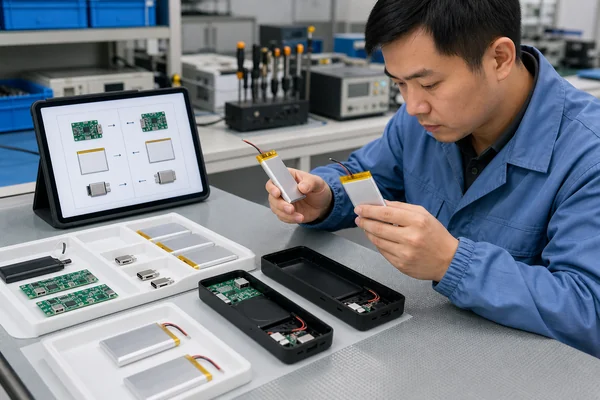
Définissez la modification du produit assez largement pour inclure les changements de matériau, de fournisseur, de conception, de micrologiciel, de procédé, de lieu de production, d’outillage, de fichiers graphiques et d’emballage. Le fournisseur doit soumettre un avis écrit avant de mettre en œuvre une modification soumise à contrôle.
- Description et motif de la modification proposée
- Modèles, bons de commande et lots de production concernés
- Anciennes et nouvelles références ou révisions des composants
- Incidence sur les performances, l’apparence, la fiabilité et la compatibilité
- Incidence sur la certification, les rapports d’essais et les documents de transport
- Échantillons, résultats de validation et date de mise en œuvre
- Gestion des stocks restants et des lots mélangés
- Relevé de l’approbation ou du refus de l’acheteur
Le silence ne doit pas valoir approbation, sauf si l’acheteur accepte délibérément cette règle. Fixez un délai de réponse et une procédure d’urgence pour les composants obsolètes ou indisponibles. Si une modification affecte les justificatifs de sécurité ou de conformité, exigez un nouvel examen de leur applicabilité avant l’expédition.
5. Définir les échantillons et le jalon d’autorisation de production
Précisez quels échantillons servent à l’examen de l’apparence, à la validation technique et à l’approbation finale de présérie. Attribuez un identifiant à chaque échantillon approuvé et reliez-le à la révision des spécifications. L’approbation doit être écrite et limitée aux caractéristiques réellement examinées.
L’approbation d’une épreuve du logo ne doit pas autoriser la production en série d’une électronique non testée. Définissez un jalon distinct d’autorisation de production reposant sur l’échantillon de référence approuvé, les fichiers graphiques définitifs, le plan de conformité, le bon de commande, l’acompte et la clôture des points techniques ouverts. La guide de contrôle pour l’approbation des échantillons de batteries externes permet de documenter cette décision.
6. Préciser la quantité minimale de commande, le processus de commande, le prix et le paiement
Distinguez les estimations des engagements contraignants. Le contrat peut décrire les règles générales de quantité minimale de commande, tandis que chaque bon de commande précise le modèle, la quantité et le prix réels. Expliquez comment un bon de commande est accepté et ce qui se passe si le fournisseur constate une incompatibilité de capacité de production, de composants ou de calendrier.
- Devise, prix unitaire et emballage inclus
- Frais d’outillage, d’ingénierie, d’essais et d’échantillons
- Acompte, solde et jalon de paiement
- Taxes, frais bancaires et traitement des variations de change
- Durée de validité du prix et procédure d’ajustement autorisée
- Statut des prévisions et caractère contraignant ou non de celles-ci
- Règles relatives aux matériaux excédentaires, aux emballages personnalisés et aux commandes annulées
Reliez le paiement final à des justificatifs que l’acheteur peut examiner. Selon la transaction, il peut s’agir de la production terminée, d’un rapport d’inspection conforme, de la liste de colisage et des documents d’expédition requis. Évitez un jalon décrit seulement comme « avant expédition » lorsque les conditions de libération sont floues.
7. Rédiger correctement la condition de livraison
Indiquez la règle Incoterms choisie avec le lieu, le port ou le point désigné et la version, par exemple « FCA [lieu désigné] Incoterms 2020 ». La Chambre de commerce internationale explique que les Incoterms répartissent certaines obligations de livraison, certains coûts et certains risques entre vendeur et acheteur.
Les Incoterms ne règlent pas toutes les questions contractuelles. Ils ne remplacent pas les spécifications produit, les conditions de paiement, la clause de transfert de propriété, la garantie, les dispositions de propriété intellectuelle ou les recours pour produits non conformes. Le contrat doit aussi préciser la date d’expédition demandée, la période de livraison, les règles d’expédition partielle, le stade de préparation de l’emballage, les responsabilités de réservation du transport et les notifications requises.
La logistique des batteries au lithium nécessite une planification propre à l’itinéraire. Confirmez qui prépare la liste de colisage, la facture commerciale, le résumé d’essais, la déclaration de marchandises dangereuses lorsqu’elle s’applique, les marquages et les informations du transporteur. Une condition commerciale promise ne peut pas rendre acceptable pour un transporteur un envoi de batteries inadapté.
8. Ajouter un accord qualité propre au modèle
La partie qualité doit préciser les contrôles de production, inspections, méthodes d’essai, relevés et critères de libération applicables au modèle. Évitez de vous appuyer sur la brochure qualité générique de l’usine.
- Contrôles des cellules et composants à réception
- Contrôles en cours de production et points de traçabilité
- Contrôles fonctionnels et d’apparence des unités finies
- Méthode de vieillissement ou de déverminage lorsqu’elle est spécifiée
- Taille des échantillons pour les essais de performance et conditions d’essai
- Définitions des défauts critiques, majeurs et mineurs
- Plan d’échantillonnage avant expédition et mesures en cas de lot non conforme
- Exigences d’étalonnage et de relevés d’inspection
ISO 2859-1:2026 définit des procédures d’échantillonnage indexées sur l’AQL pour le contrôle lot par lot par attributs. Si les parties l’utilisent, indiquez l’édition, le niveau et le régime de contrôle, les valeurs AQL et les règles de changement. L’AQL intervient dans une décision d’échantillonnage. Il ne garantit pas le taux exact de défauts dans l’envoi.
L’acheteur doit conserver le droit de recourir à son propre inspecteur ou à un tiers convenu. Précisez qui paie l’inspection initiale, la réinspection, le tri et les déplacements si les produits ne sont pas prêts. La liste de contrôle des essais qualité des batteries externes peut être adaptée en méthodes d’acceptation propres au modèle.
9. Définir les suites d’une inspection non conforme
Une inspection non conforme doit entraîner le blocage du lot concerné. Le contrat doit empêcher son expédition, son réétiquetage ou son mélange avec d’autres lots sans décision écrite de l’acheteur. Précisez les actions possibles : tri complet, reprise, remplacement, ajustement de prix, annulation ou réinspection.
Exigez un dossier d’actions correctives pour les défauts récurrents ou graves. Il doit identifier les lots concernés, les mesures d’isolement, la cause racine, la correction durable et le résultat de vérification. La conformité de quelques unités de remplacement choisies à la main ne prouve pas que le lot initial a été corrigé.
10. Répartir les responsabilités de conformité et de documentation
Énumérez les marchés de destination et les documents requis pour le modèle exact. Identifiez qui choisit les normes applicables, qui commande les essais, qui détient les rapports et qui examine les exigences d’étiquetage ou de notice. N’écrivez pas simplement « tous les certificats inclus ».
- Nom du rapport ou du certificat, édition de la norme et organisme émetteur
- Demandeur, fabricant et désignation du modèle figurant sur le document
- Cellule, batterie assemblée, PCBA et configuration sans fil couverts
- Résumé d’essais UN 38.3 et autres documents de transport
- Responsabilité de l’étiquette, de la notice et des informations sur l’importateur pour la destination
- Règles d’actualisation des justificatifs après un changement de composant ou de conception
- Accès de l’acheteur aux rapports à jour avant la production et l’expédition
Les exigences relatives aux produits et au transport évoluent, et un rapport peut ne pas couvrir toutes les variantes. Le guide de certification des batteries externes explique pourquoi l’acheteur doit vérifier la correspondance de chaque document avec la configuration du produit et le marché visé.
11. Figer les emballages, les étiquettes et les codes-barres
Approuvez les emballages de vente et d’expédition sous forme de fichiers maîtrisés. Consignez la révision graphique, la langue, les caractéristiques nominales, les données du code-barres, les accessoires, le nombre d’unités, les spécifications des cartons et la méthode d’emballage. Précisez quelle partie fournit les traductions et qui approuve les informations réglementaires ou relatives à l’importateur.
L’emballage personnalisé génère souvent des surplus. Décidez à qui appartiennent les boîtes, notices et inserts inutilisés, combien de temps ils seront stockés et s’ils peuvent être détruits après la résiliation. Interdisez l’utilisation ou la vente d’emballages refusés portant la marque de l’acheteur.
12. Distinguer la propriété intellectuelle préexistante de celle créée pour le projet
La propriété intellectuelle doit être répartie entre ce que chaque partie détenait avant le projet et ce qui est créé pendant celui-ci. Une usine peut utiliser une plateforme de charge, un procédé de fabrication ou une bibliothèque de micrologiciel existants. L’acheteur peut apporter ses marques, fichiers graphiques, dessins et modèles industriels, exigences d’interface ou code propriétaire.
Pour les travaux du projet, identifiez les droits de propriété ou de licence sur les dessins et modèles industriels, les fichiers CAO, les schémas électroniques, le micrologiciel, les éléments d’interface utilisateur, les montages d’essai, les fichiers d’emballage et la documentation technique. L’OMPI rappelle qu’il n’existe pas de contrat type unique de transfert de technologie ; le contrat doit définir les droits réels de propriété, d’accès et d’utilisation autorisée.
- Qui peut fabriquer, vendre, modifier le produit conçu ou accorder des sous-licences
- Territoire, domaine de produits et durée de toute licence
- Obligation éventuelle de remettre les fichiers sources ou le code source
- Utilisation de propriété intellectuelle de tiers et responsabilité des licences requises
- Restrictions concernant la présentation du produit ou du nom de l’acheteur dans les supports commerciaux
- Mesures requises à la fin du contrat
13. Consigner la propriété des outillages et les droits d’accès
Le paiement d’un outillage ne suffit pas toujours à déterminer qui en est propriétaire. Énumérez chaque moule, montage, gabarit d’essai et outil de programmation, avec son coût, son emplacement, son identification, la responsabilité de son entretien et sa durée de vie prévue. Précisez si l’acheteur peut l’inspecter ou le retirer et si le fournisseur peut l’utiliser pour un autre client.
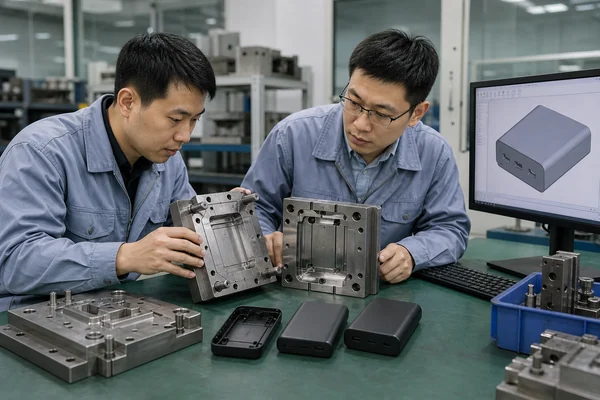
Incluez les frais de stockage, l’approbation des réparations, le remplacement après usure et la procédure de restitution ou de destruction. Si un outil intègre une technologie préexistante du fournisseur, son transfert peut nécessiter davantage que le déplacement physique du moule. Un conseil juridique doit vérifier que les clauses de propriété respectent le droit local des biens et de la propriété intellectuelle.
14. Encadrer la confidentialité et la sous-traitance
Une clause de confidentialité doit identifier les informations protégées, les destinataires autorisés, les mesures de sécurité, les exclusions et la durée de l’obligation. Décidez si le fournisseur peut photographier le produit, le présenter sur un salon, le publier en ligne ou citer l’acheteur comme client.
La fabrication fait souvent intervenir des fournisseurs externes de cellules, des moulistes, des imprimeurs d’emballages et des laboratoires. Exigez la déclaration ou l’approbation d’une sous-traitance importante lorsqu’elle affecte la qualité, la confidentialité, la conformité ou le lieu de production. Le fournisseur principal doit rester responsable des obligations qui lui sont attribuées, sauf disposition contraire du contrat.
15. Fixer les règles de traçabilité, de conservation des relevés et d’audit
Définissez le lien entre le produit fini et le lot de cellules, la révision du PCBA, le micrologiciel, la date de production, le relevé d’inspection et la liste de colisage. Précisez la durée de conservation des relevés et le délai de réponse lorsque l’acheteur les demande dans le cadre d’une enquête qualité.
Une clause d’audit doit préciser un préavis raisonnable, le périmètre, la confidentialité et l’accès aux zones de production et aux relevés pertinents. Elle ne remplace pas l’inspection du produit. Un audit d’usine vérifie les systèmes et les capacités ; l’inspection d’un lot vérifie les produits expédiés. Le guide de vérification d’une usine de batteries externes explique quels justificatifs un acheteur peut demander.
16. Rédiger une procédure de garantie et de réclamation utilisable
Une mention comme « garantie de 12 mois » est incomplète. Définissez le début de la période, les défauts couverts, les exclusions, les justificatifs de réclamation, le délai de réponse et les mesures de réparation. Décidez si la garantie couvre les unités défectueuses à réception, les défauts de fabrication, les performances inférieures à une limite convenue et les défaillances signalées par les utilisateurs finaux.

| Élément de garantie | Question à traiter |
|---|---|
| Date de début | Expédition, réception par l’acheteur, vente au détail ou autre événement documenté ? |
| Défaillance couverte | Quels défauts de fonctionnement, de fabrication et de performance sont couverts ? |
| Exclusions | Comment sont traités l’utilisation abusive, les dommages physiques, les réparations non autorisées et les conditions de stockage ? |
| Justificatifs | Les numéros de série ou de lot, photographies, relevés de mesure et échantillons retournés sont-ils requis ? |
| Délais de traitement des réclamations | Sous quels délais chaque partie doit-elle accuser réception, enquêter et répondre à la réclamation ? |
| Mesure de réparation | Réparation, remplacement, avoir, remboursement, unités de réserve ou autre mesure convenue ? |
| Transport et élimination | Qui paie les retours, la prise en charge des marchandises dangereuses et l’élimination locale approuvée ? |
Le retour international de batteries au lithium peut être coûteux ou peu pratique. Le contrat peut autoriser une analyse ou une élimination locale documentée, tout en préservant suffisamment de preuves pour rechercher la cause racine. Définissez une procédure d’escalade en cas de surchauffe, de gonflement, de fumée, d’incendie ou de réclamations similaires répétées.
17. Prévoir les rappels, les incidents de sécurité et l’assurance
Définissez comment les parties échangent les informations et coopèrent en cas d’incident de sécurité, d’enquête d’une autorité, d’action d’une plateforme de vente ou de rappel. Incluez les contacts à prévenir, les données de traçabilité, la conservation des échantillons, les responsabilités d’enquête et l’approbation des communications. Les clauses de répartition des coûts et d’indemnisation doivent être examinées juridiquement, car elles dépendent de la faute, du droit et de l’assurance.
Demandez quelles polices d’assurance sont maintenues, leurs plafonds, exclusions, territoires et justificatifs de couverture. Une attestation d’assurance ne prouve pas que toute réclamation liée au produit est couverte. Les conditions de la police et l’identité des assurés comptent.
18. Prévoir les retards, la suspension et la force majeure
Précisez comment le fournisseur signale un retard, les informations à inclure dans la notification et si l’acheteur peut changer le mode de transport, fractionner la commande ou annuler les quantités concernées. Une clause de livraison doit distinguer un retard imputable à l’usine d’un événement échappant à un contrôle raisonnable.
Une clause de force majeure nécessite un périmètre défini, une obligation de notification, une exigence de limitation des conséquences et un terme. Décidez combien de temps l’exécution peut être suspendue avant que l’une des parties puisse résilier. Ne supposez pas qu’une référence générique aux pénuries couvre toute hausse de prix ou commande tardive de composants.
19. Définir les obligations de résiliation et de transition
Énumérez les droits de résiliation en cas de manquement grave, de défaillances qualité répétées, de modifications non autorisées, d’insolvabilité, d’usage abusif de propriété intellectuelle, de retard prolongé ou de non-respect des actions correctives convenues. Prévoyez, lorsque c’est approprié, des délais de préavis et de remédiation.
La résiliation ne fait pas disparaître les stocks physiques ni les données du projet. Décidez du sort des produits finis, des travaux en cours, des composants personnalisés, des emballages de marque, des acomptes, des outillages, des échantillons, des dessins, des fichiers de micrologiciel et des informations confidentielles. Si la production peut être transférée, identifiez l’assistance à la transition et les frais éventuels.
20. Choisir délibérément le droit applicable et les modalités de règlement des litiges
Le contrat doit traiter du droit applicable, de la compétence des tribunaux ou de l’arbitrage, de la langue, des notifications et de la hiérarchie des documents. La Convention des Nations Unies sur les contrats de vente internationale de marchandises, connue sous le sigle CISG, peut s’appliquer à certaines ventes internationales. La CNUDCI explique qu’elle couvre la formation du contrat, les obligations du vendeur et de l’acheteur, la conformité, les recours et le transfert des risques, tandis que certaines questions restent hors de son champ d’application.
Les parties doivent décider avec leur conseil juridique si la CISG s’applique, est aménagée ou est exclue. Une clause d’arbitrage nécessite également des choix praticables concernant l’institution ou le règlement, le siège, la langue, le nombre d’arbitres et les mesures provisoires. Copier une clause d’un contrat sans rapport peut provoquer un débat procédural coûteux avant même l’examen du litige sur le produit.
Signaux d’alerte avant la signature
- Le fournisseur ne confirmera les composants qu’après réception de l’acompte.
- Le devis autorise des cellules ou contrôleurs « équivalents » sans procédure d’approbation.
- L’échantillon approuvé n’a ni identifiant, ni relevé de configuration, ni fichiers graphiques associés.
- La qualité est décrite comme « conforme aux pratiques du secteur », sans méthodes d’essai ni limites.
- L’usine peut expédier après son contrôle interne, même si l’inspection de l’acheteur conclut à une non-conformité.
- L’outillage est payé par l’acheteur, mais les droits de propriété, d’utilisation et de retrait ne sont pas précisés.
- La garantie indique une durée, mais aucune procédure de réclamation ni mesure de réparation.
- La condition commerciale ne précise ni lieu, ni port, ni version des Incoterms.
- La conformité est promise sans désigner le modèle, la norme ou le document.
- Les clauses de droit applicable et de règlement des litiges sont absentes ou contredisent le bon de commande.
Liste de contrôle de révision du contrat prête à copier
PARTIES ET PÉRIMÈTRE
Dénominations sociales, adresses et site de fabrication :
Type de projet et travaux inclus :
Sous-traitants approuvés :

MAÎTRISE DU PRODUIT
Révision des spécifications produit :
Nomenclature approuvée ou liste des composants maîtrisés :
Identifiant de l’échantillon de référence :
Révision des fichiers graphiques et de l’emballage :
Avis de modification technique et procédure d’approbation :

CONDITIONS COMMERCIALES
Quantité minimale de commande et acceptation des bons de commande :
Devise, prix et règles d’ajustement :
Frais d’outillage, d’essais et d’ingénierie :
Jalons de paiement :
Date de livraison et règle d’expédition partielle :
Règle Incoterms désignée, lieu et version :

QUALITÉ ET CONFORMITÉ
Plan qualité et méthodes d’essai :
Norme d’échantillonnage, niveau de contrôle et AQL :
Définitions des défauts critiques, majeurs et mineurs :
Procédure en cas de lot non conforme, de reprise et de réinspection :
Rapports, certificats et documents de transport requis :
Traçabilité et durée de conservation des relevés :

PROPRIÉTÉ INTELLECTUELLE, OUTILLAGES ET CONFIDENTIALITÉ
Propriété intellectuelle préexistante :
Propriété intellectuelle du projet et droits de licence :
Propriété, stockage et retrait des outillages :
Fichiers sources, micrologiciel et relevés techniques :
Confidentialité et restrictions de communication commerciale :

APRÈS LA LIVRAISON
Début, périmètre, exclusions et justificatifs de garantie :
Délai de réponse aux réclamations et mesure de réparation :
Procédure d’incident de sécurité et de rappel :
Exigences d’assurance :

EXAMEN JURIDIQUE
Hiérarchie des documents :
Droit applicable et traitement de la CISG :
Modalités judiciaires ou d’arbitrage :
Obligations de résiliation et de transition :
Utilisez la liste remplie pour orienter votre conseil juridique et repérer les lacunes commerciales avant de verser l’acompte. Commencez par une demande de devis de batteries externespermettant la comparaison, puis intégrez les exigences acceptées au contrat, aux spécifications et au bon de commande.
Questions fréquentes des acheteurs
Faut-il un contrat de fabrication distinct pour une petite commande OEM ?
Le volume documentaire peut être adapté au risque du projet, mais une petite commande nécessite malgré tout des spécifications maîtrisées, un bon de commande accepté, une règle de modification, des critères qualité, des conditions de paiement et une procédure de garantie. Un contrat court assorti d’annexes claires est plus utile qu’un long modèle générique.
L’usine peut-elle remplacer une cellule par une cellule équivalente ?
Uniquement selon la règle de maîtrise des modifications convenue. L’acheteur doit préciser si les alternatives sont interdites, préapprouvées ou soumises à un examen écrit avec échantillons et justificatifs. La capacité seule ne permet pas d’établir l’équivalence.
Les valeurs AQL doivent-elles figurer dans le contrat ?
Consignez la norme d’échantillonnage et son édition, le niveau et le régime de contrôle, les valeurs AQL, les définitions des défauts et les mesures après rejet. Ces détails peuvent figurer dans un accord qualité référencé plutôt que dans le document commercial principal.
À qui appartient un moule payé par l’acheteur ?
Le paiement seul ne détermine pas nécessairement les droits de propriété, d’accès ou de transfert. Le contrat doit identifier l’outil, son propriétaire, les usages autorisés, le lieu de stockage, l’entretien, la procédure de retrait et son sort après résiliation. Un conseil juridique local est approprié.
Une règle Incoterms couvre-t-elle la qualité et la garantie du produit ?
Non. Les Incoterms répartissent des obligations de livraison, des coûts et des risques définis. Le contrat de fabrication et ses annexes doivent toujours couvrir la conformité du produit, l’inspection, le paiement, la propriété, la garantie, la propriété intellectuelle et les recours.
Un acheteur peut-il utiliser un contrat de fabrication standard trouvé en ligne ?
Un modèle peut aider à identifier les sujets à traiter, mais il ne connaît ni la configuration du produit, ni les pays concernés, ni les modalités d’outillage, ni la procédure de certification, ni le rapport de négociation. Utilisez-le comme liste de questions et faites adapter le contrat à la transaction par un conseil juridique.
Références officielles
- CNUDCI : Convention des Nations Unies sur les contrats de vente internationale de marchandises
- Chambre de commerce internationale : ce que les règles Incoterms 2020 régissent et ne régissent pas
- Organisation Mondiale de la Propriété Intellectuelle : accords de transfert de technologie
- ISO 2859-1:2026 : procédures d’échantillonnage indexées sur l’AQL pour le contrôle lot par lot
Relier les conditions commerciales à la maîtrise de la production
Le contrat doit refléter la façon dont la commande sera réellement fabriquée, approuvée, inspectée et suivie. Placez les règles commerciales dans le contrat, les limites techniques dans les spécifications, et les quantités et dates propres à la commande dans le bon de commande. Gardez leurs révisions cohérentes.
Pour un projet OEM/ODM YULIDA, transmettez le modèle visé, la quantité, le marché, le périmètre de personnalisation et les documents requis via la page de contact. L’usine peut alors fournir les informations pertinentes sur le modèle, les relevés d’échantillons, les hypothèses du devis et les documents de production ou d’inspection. L’acheteur doit faire appel à son propre conseil juridique pour le contrat de fabrication définitif.
