







What Does 15W Mean on a Power Bank With Wireless Charging?
Your supplier’s spec sheet says 15W wireless, 20W USB-C and 10,000 mAh. The packaging designer wants to put all three on the front. Before you send the box to print, check which of those numbers your sample can back up.
If you’re sourcing a power bank with wireless charging, read “up to 15W” as the maximum the supplier claims under supported conditions. Ask which phone reached it, how long the output held, and whether it changed when USB-C was in use.
What to verify before you print the box
| Claim on the box | Что проверить | What to print |
|---|---|---|
| Up to 15W wireless | Which phone or test receiver reached 15W? Which case was fitted, and how long did the output hold? | Name the conditions needed to reach the verified maximum. |
| Magnetic attachment | Does the bank sit flat, hold securely and keep charging with the intended phone and case? | List the combinations you verified. Don’t promise that every magnetic case will work. |
| Выход USB-C 20W | Which port and USB-C PD profile deliver 20W when used on their own? | Give the wired rating separately from the wireless rating. |
| Wired and wireless at once | Try both outputs together. Watch for a drop or brief interruption when the cable is connected. | List the supported output combination rather than adding the two standalone ratings. |
| 10,000 mAh battery | Confirm the rated capacity. If the artwork promises a recharge count, measure it on the named phone. | Keep rated capacity separate from any recharge-count claim. |
| Qi2 or foreign-object detection | Match the Qi listing or protection report to the finished model and revision. | Print only the mark or claim your evidence supports. |
The numbers here are examples, not specifications for a specific YULIDA model.
Start with the phone and case your customer will use
A phone can snap onto a power bank and still charge below 15W. Try it first without a case, then with the case you plan to list as compatible. Check whether the bank sits flat around the camera bump and whether charging stays connected. Record power separately: the charging icon can confirm a connection, but it won’t tell you the wattage.
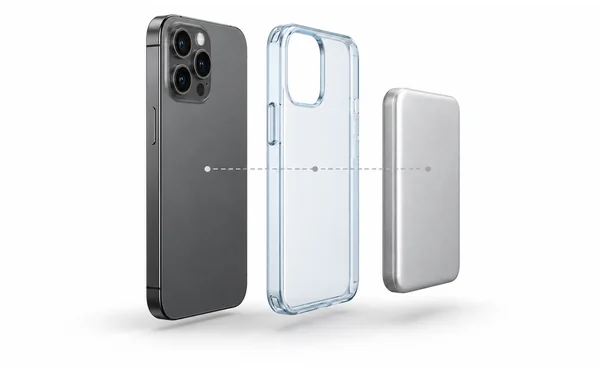
If a custom version changes the back cover, coil position or shielding, repeat the check on the assembled sample. This wireless charging module enclosure checklist is a useful reference for what to document when those parts change.
Plug in USB-C and see what changes
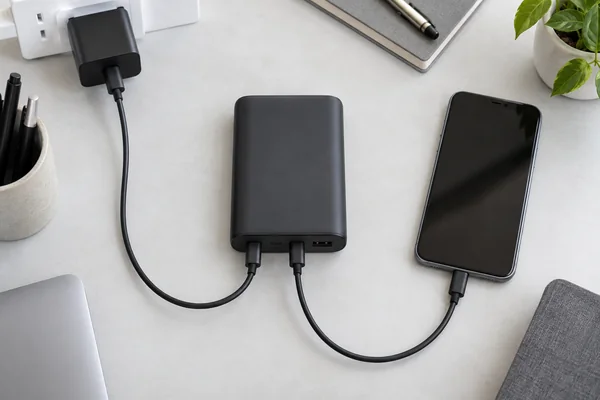
Check wireless-only and USB-C-only output first. Then plug a second device into USB-C while the phone is already charging wirelessly. If charging pauses or either output drops, note what happens and the power available after both devices reconnect. That result belongs in the spec table if you plan to advertise simultaneous charging.
Test pass-through separately if it’s part of the claim. In that setup, wall power goes into the bank while the bank supplies a device. Two devices charging from the bank’s battery is a different setup.
Match each claim to the version you’re ordering
Before approving a Qi or Qi2 mark, match the finished model, part number and Qi ID in the Wireless Power Consortium’s certified-product database. A listing for a similar-looking model isn’t enough.
For foreign-object detection (FOD), ask what the lab or supplier evaluated and which sample revision the report names. This guide to reviewing FOD evidence explains what to request if the report doesn’t clearly identify the version you’re buying.
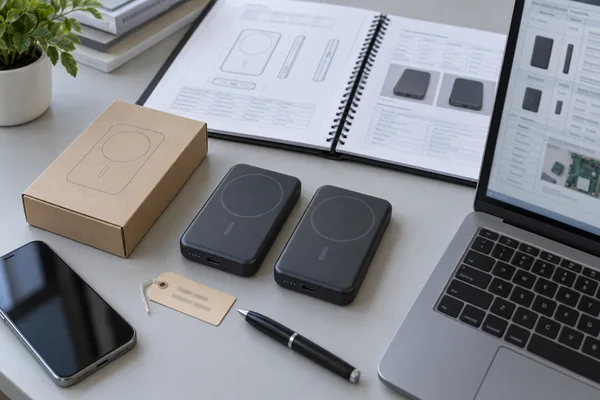
Keep the final wording, supporting evidence and sample revision in the same approval record. If you’re requesting an OEM/ODM quote from YULIDA, tell us the target phones, the charging modes you need, and what you want printed on the box. That gives the sampling team something specific to verify.
Часто задаваемые вопросы
1. Does a 15W wireless power bank charge every phone at 15W?
No. The phone, charging mode and test conditions all matter. Check the exact phone and case together before making a model-specific claim.
2. Does 15W wireless plus 20W USB-C mean 35W total?
Only if the supplier can show both ratings are available at the same time. Ask for the measured output on each path with both in use.
3. Is every magnetic power bank Qi2 certified?
No. A magnetic attachment tells you how the bank holds onto the phone or case. To confirm Qi2 certification, look up the finished model and Qi ID in the WPC database.
4. How many times can a 10,000 mAh wireless power bank recharge a phone?
There’s no single number. It depends on the phone’s battery, the charging mode and energy lost during the transfer. Test the named phone in the mode you plan to advertise.
5. Can a thick or magnetic phone case reduce wireless charging power?
Yes, it can. The case can change the gap or alignment between the phone and charger. Compare the same phone with and without the intended case, and record whether it stays connected and what power it reaches.
6. Can the bank charge a phone wirelessly while the bank itself is plugged in?
Only if that model supports wireless pass-through. Test it with the intended wall adapter and cable. Record whether wireless charging stays on when you connect or disconnect the input cable.
7. How can I tell whether a power bank holds 15W after it starts charging?
Ask for a power log from an agreed test setup, not just a peak reading. Record the phone or receiver, its starting charge, the case, the ambient temperature and the test duration so you can compare samples under the same conditions.
Официальные источники и проверка
Эти первоисточники подтверждают рассматриваемые в статье сведения о стандартах, совместимости, безопасности или перевозке. Уточняйте действующие требования для точной модели продукта и целевого рынка.
- Wireless Power Consortium — Информация о стандартах Qi и Qi2, сертификации и беспроводной зарядке.
