






Do Power Banks Need Replaceable Batteries for EU Sales in 2027? A Buyer’s Scope Check
Do not assume that an EU power bank order needs a removable-battery redesign for 2027. The European Commission’s July 2026 guidance says that a product whose primary function is supplying electrical energy to other products can itself be considered a portable battery. Rechargeable power banks are one of its examples. In that case, Article 11’s removability and replaceability requirements would not apply in the first place.
Before approving new tooling, document how the proposed product is classified. The name on the quotation is not enough. This guide concerns that purchasing decision; it does not declare any YULIDA model exempt or provide a legal opinion on a particular product.
What the 2027 date means for a power bank project
The Commission identifies 18 February 2027 as the application date for Article 11. Its updated removability and replaceability guidance distinguishes products incorporating portable batteries from products that can themselves constitute portable batteries. See Section 2 of the 14 July 2026 Commission Notice.
The guidance is not legally binding and does not settle every product configuration. Its scope explanation is also not an exemption from every other battery, product-safety, labeling, waste or transport requirement. Keep the Article 11 decision separate from the rest of the market-entry review.
Start with the product’s function
Ask what the finished product is designed to do, rather than starting with the question of whether its cells can be unscrewed. The Commission guidance explains that the portable-battery obligation, where applicable, concerns the entire battery rather than individual cells. Describe the normal operating modes and the relationship between the stored energy and the external device. Include accessories and any additional functions offered in the quotation.
Two products in the same power bank catalog may need different assessments. For a combination product, give the reviewer enough information to assess its primary function. Do not invent a numerical test such as a percentage of operating time or a share of the selling price.
| Product description in the RFQ | Zu klärende Frage | Anzufordernde Nachweise |
|---|---|---|
| Portable product primarily supplying power to external devices | Can the finished product itself be classified as a portable battery? | Intended-use description, operating modes, product specification and written classification rationale |
| Another appliance with an incorporated battery | Does Article 11 apply, and which provisions or exceptions are relevant? | Complete appliance description and product-specific assessment from the responsible reviewer |
| Charging product with additional functions | Do those functions change the classification analysis? | Feature list, instructions, diagrams and assessment of the proposed configuration |
This table is a buyer’s review structure, not a classification result. Do not use the first row as a shortcut to approve an unreviewed model.
Build a scope file before requesting new tooling
1. Identify the exact configuration
Record the model, drawing revision, battery assembly, enclosure, ports, cables and firmware where relevant. List optional functions separately. Ask the supplier to identify differences between the sample, quotation and intended production build.
Use YULIDA’s product specification guide for the broader purchasing file. For this review, add a short intended-use statement and the configuration on which the classification relies.
2. Assign the classification review
Agree who will obtain and approve the market-specific assessment. The supplier, buyer and importer should work from the same specification. Where the answer is uncertain, ask a qualified EU product-compliance adviser to review it before a commercial decision depends on it.
Request a written explanation with the source version and review date. “All power banks are exempt” and “all batteries must be removable in 2027” are both too broad for an approval record.
3. Separate scope from design preferences
A buyer may want serviceability for commercial reasons even when a particular removability rule does not require the requested change. Record that as a separate product requirement. Compare the proposed service process, replacement parts, instructions, costs and verification needs without presenting a voluntary design choice as a legal obligation.
4. Record what would trigger another review
Changes to intended use, feature set, battery arrangement or product configuration can make an earlier assessment less useful. Include a review trigger in the change-control process so the purchasing file stays connected to the shipped product. YULIDA’s Leitfaden zu Stücklisten- und Änderungssteuerung explains how to connect specifications, approvals and production records.
Compare quotations on the same approved basis
If one supplier includes a removable-battery redesign and another does not, first check whether they assessed the same product. A price comparison is unreliable when one quotation includes new tooling, a replacement battery assembly and additional verification while the other assumes an existing sealed design.
Ask suppliers to itemize proposed changes and explain their basis. Separate the existing configuration, buyer-requested features and changes considered necessary by the compliance reviewer. Keep unresolved points visible rather than hiding them in a general “EU compliant” statement.
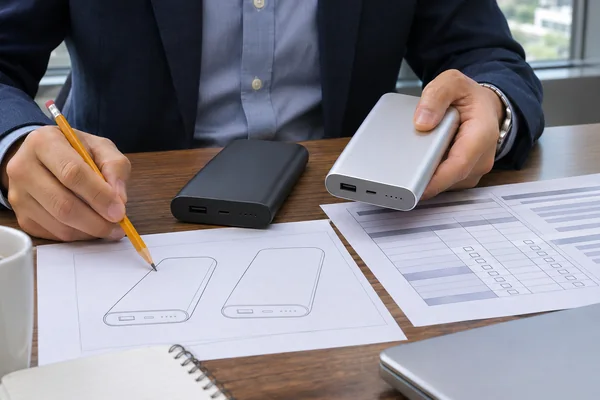
If a redesign is approved, agree the new sample and verification scope before release. Do not assume that reports for the original construction automatically cover a different enclosure, battery connection or service arrangement. Leave battery disassembly and design verification to qualified personnel following an approved safety procedure.
Keep the remaining compliance work open
Give product classification, market-entry requirements and transport documents separate entries in the project checklist. A conclusion about Article 11 should close only that question. It should not be copied into the file as blanket approval for the product.
Die country-by-country compliance guide und label requirements guide cover adjacent purchasing questions. Recheck the current requirements and the exact model evidence when preparing the actual launch.
What to send YULIDA for an OEM enquiry
Send the destination market, intended launch date, product functions, proposed model, order quantity and any serviceability requirement. Include your classification questions and ask which drawings, specifications and configuration records can be supplied for review.
Through the YULIDA OEM/ODM enquiry, agree the sample and document scope before approving changes. This article does not confirm a removable-battery option, a legal classification or a redesign capability for any particular model; those points require project-specific confirmation.
Häufig gestellte Fragen
1. Must every power bank have a replaceable battery for EU sales in 2027?
No blanket redesign conclusion should be drawn from the date alone. Review the exact product’s classification and applicable requirements before approving a change. Keep the written assessment with the purchasing specification.
2. Is a product labeled “power bank” automatically outside Article 11?
No. The commercial name is not enough. Document the intended use, primary function and complete configuration, then have the responsible reviewer assess the applicable scope.
3. What should buyers do with a multifunction power bank?
List every function and normal operating mode in the review file. Do not assume an assessment of a simpler charging product covers the combination. Ask for a configuration-specific conclusion before committing to tooling.
4. Does an Article 11 scope conclusion replace other compliance checks?
No. Keep the remaining market-entry, safety, labeling, waste and transport review separate. A decision about battery removability should not become a blanket statement that the product is approved for sale.
5. Should an OEM buyer approve new tooling before the assessment is finished?
Resolve the reason for the proposed change first. Ask the supplier to identify which changes are requested by the buyer and which follow from the reviewer’s assessment, then compare quotations on that basis.
6. Can we request a serviceable design even if the rule does not require it?
You can make serviceability a purchasing requirement, subject to supplier confirmation and appropriate review. Specify the service process, parts, instructions and verification needed instead of describing the preference as a legal mandate.
7. Does YULIDA confirm that a particular model is exempt or has a removable battery?
This article makes neither claim. Request the exact model specification and project documents, and obtain the applicable classification assessment. Any proposed design option must be confirmed for that project.
8. What should trigger a fresh review after sample approval?
Review changes that could affect the original classification or approved construction, including intended use, added functions and battery or enclosure changes. Record the revised documents and approval before releasing the changed build.
