






Description
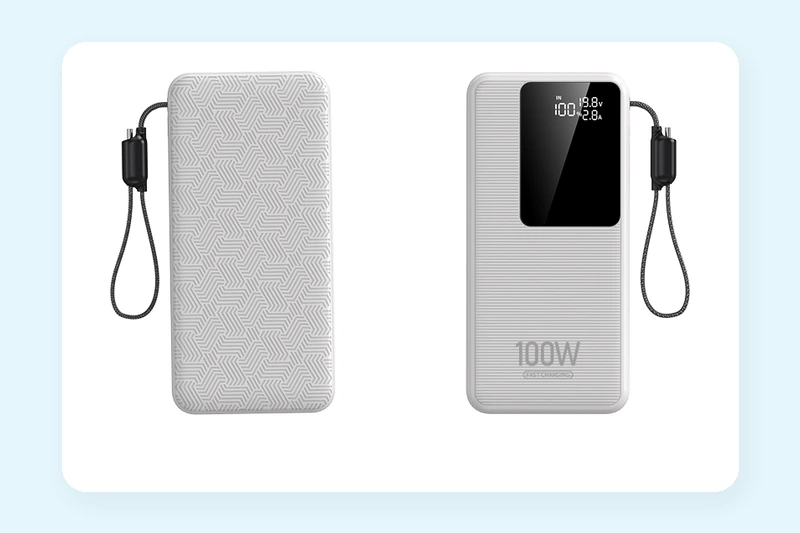
J721 100W Strap Cable Power Bank Overview
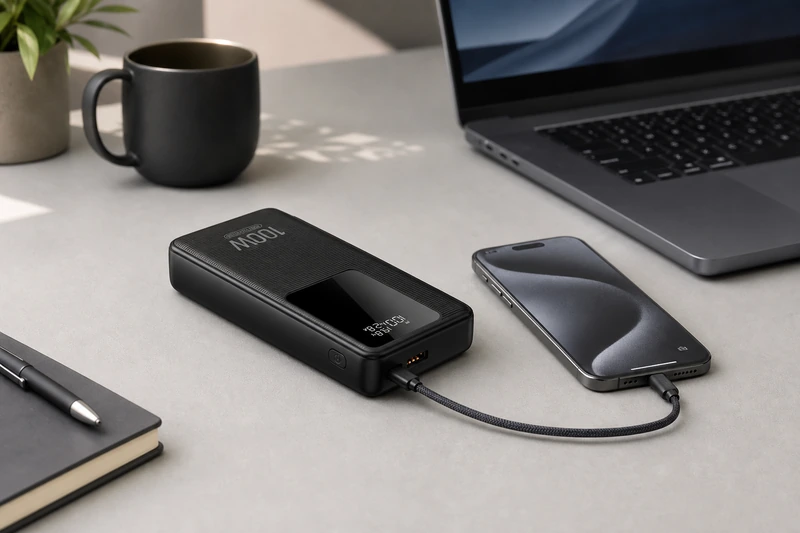
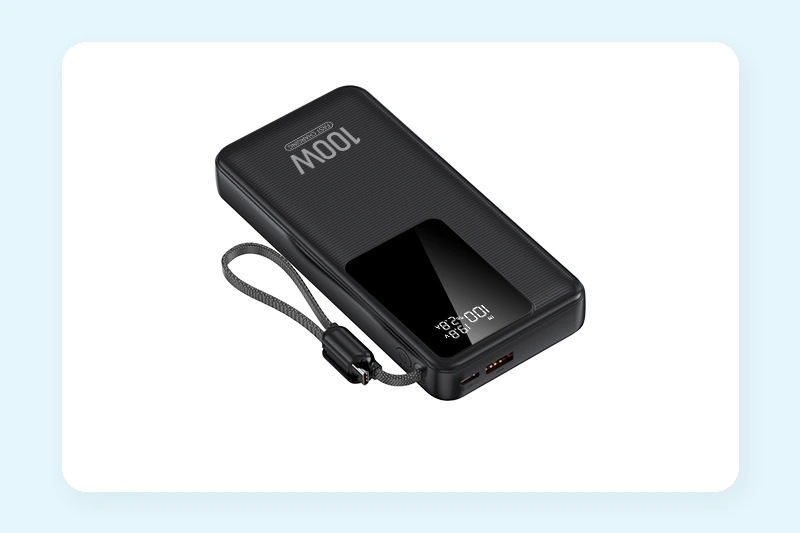
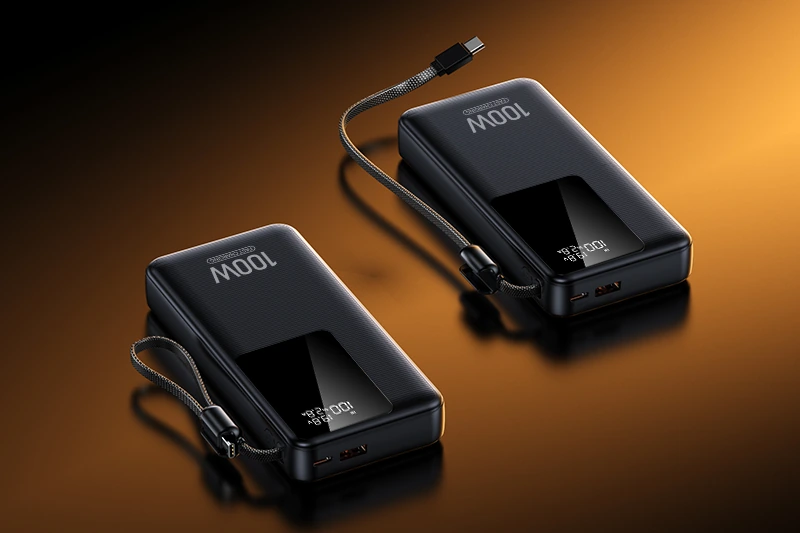
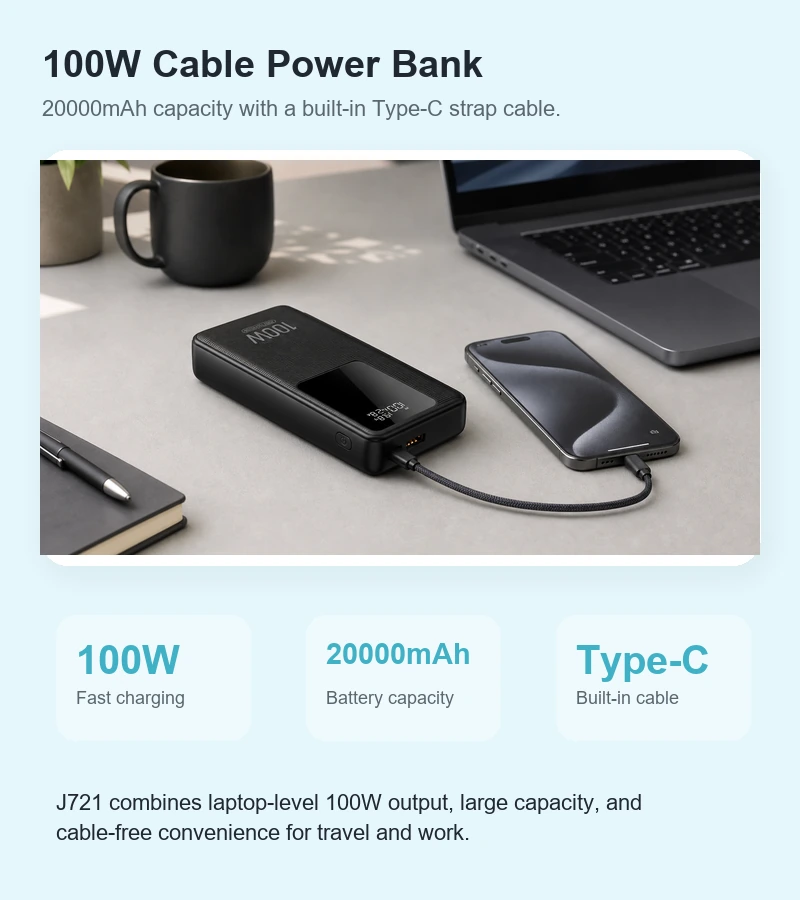
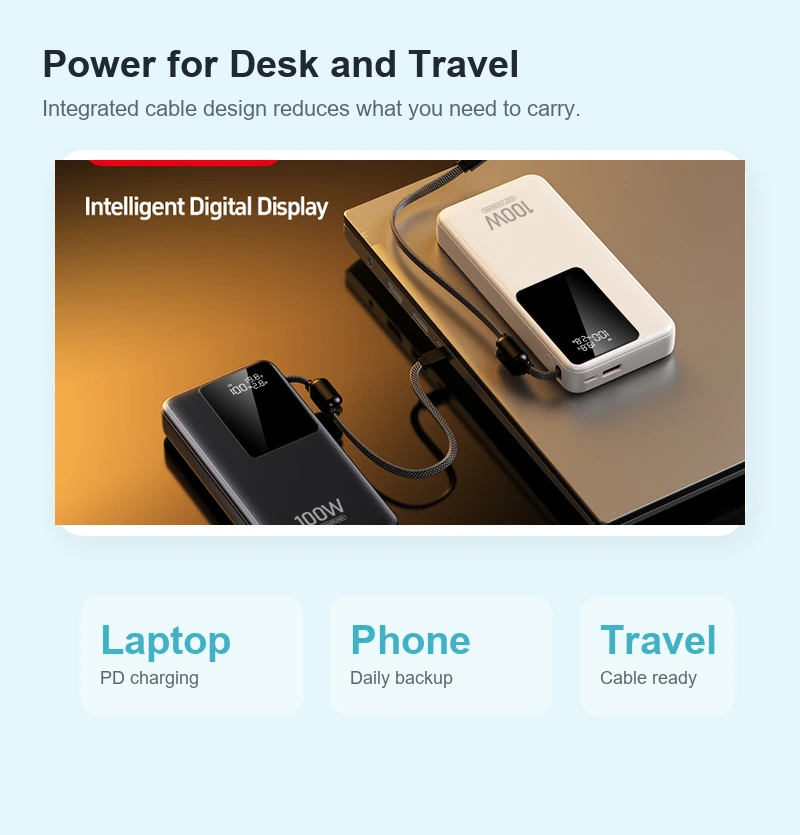
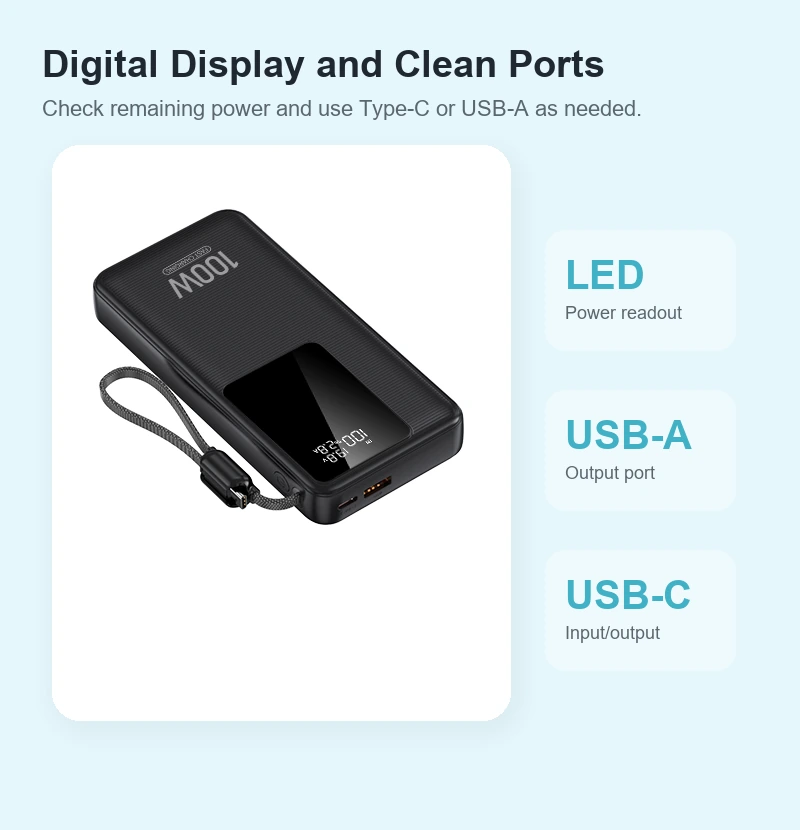
The YULIDA J721 is a 20000mAh power bank with a built-in Type-C strap cable, a separate Type-C port and USB-A output. Both Type-C interfaces list output up to 20V/5A, equivalent to 100W, while their highest listed input is 20V/3.25A, equivalent to 65W. Protocol support and target-device compatibility require sample validation.
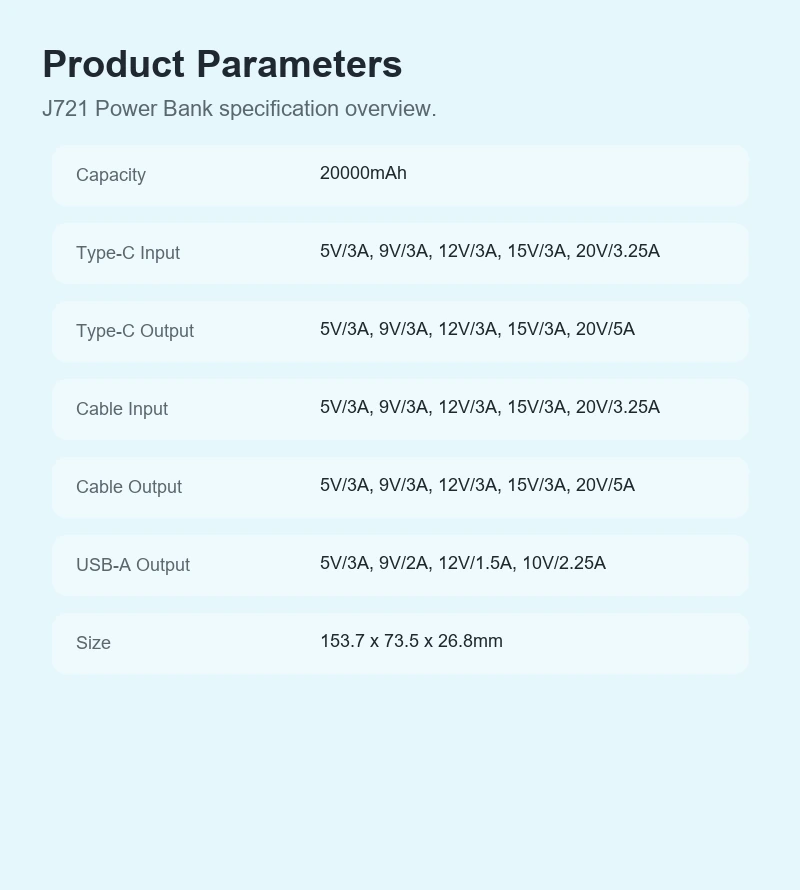
Verified J721 Specifications
| Item No. | J721 |
| Capacity | 20000mAh |
| Type-C port input | 5V/3A, 9V/3A, 12V/3A, 15V/3A, 20V/3.25A |
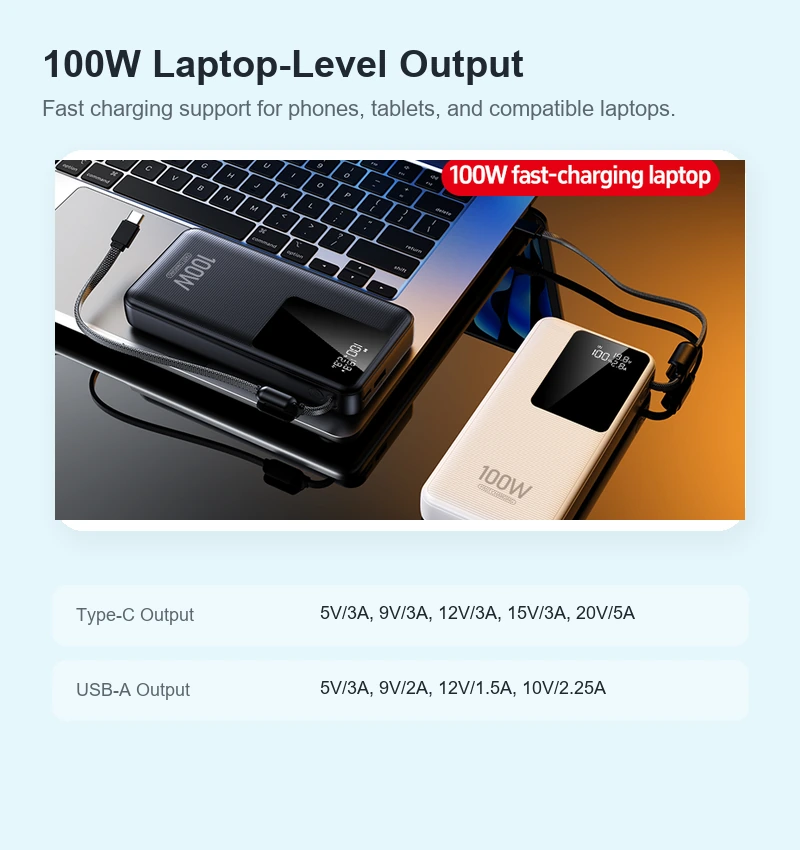
| Type-C port output | 5V/3A, 9V/3A, 12V/3A, 15V/3A, 20V/5A |
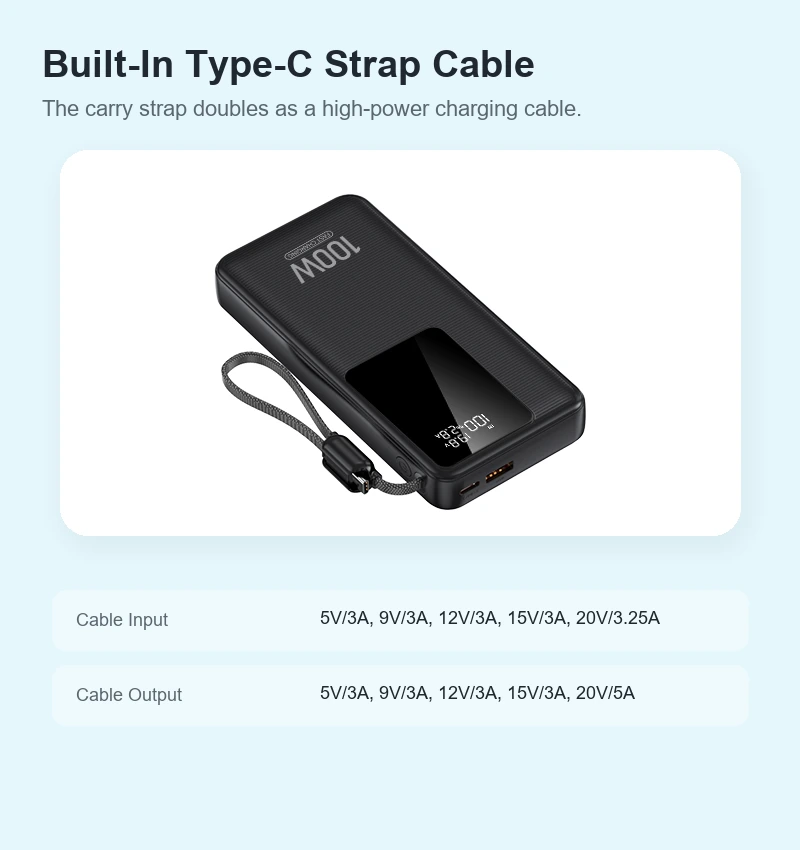
| Type-C strap-cable input | 5V/3A, 9V/3A, 12V/3A, 15V/3A, 20V/3.25A |
| Type-C strap-cable output | 5V/3A, 9V/3A, 12V/3A, 15V/3A, 20V/5A |
| USB-A port output | 5V/3A, 9V/2A, 12V/1.5A, 10V/2.25A |
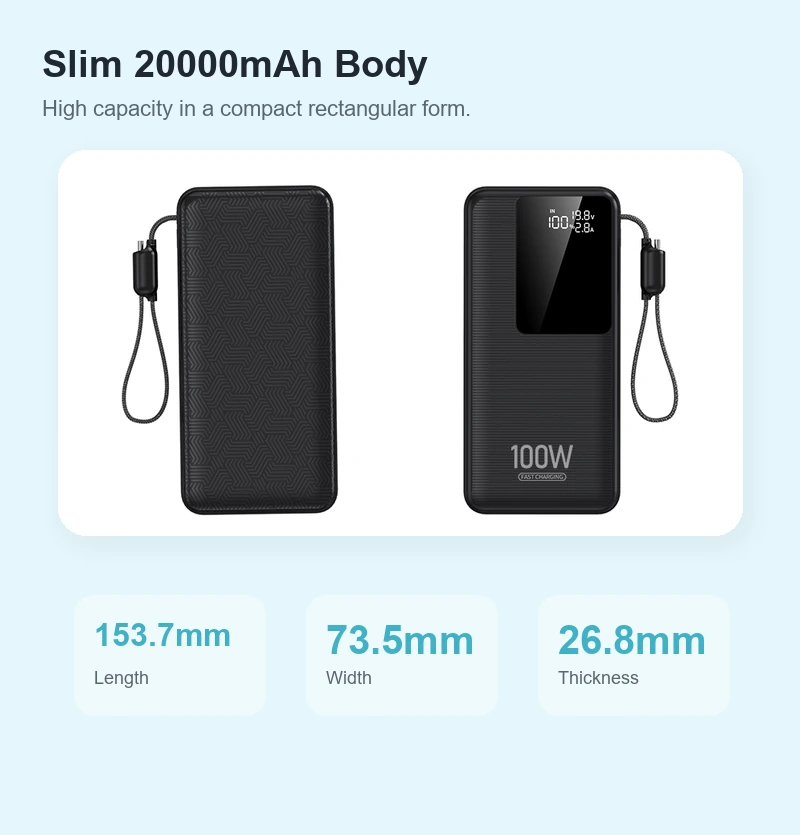
| Dimensions | 153.7 × 73.5 × 26.8mm |
| MOQ | 500 pieces |
100W Type-C Output and 65W Input
The Type-C port and built-in cable list 20V/5A output and 20V/3.25A input. Keeping input and output values separate prevents a 100W output rating from being misrepresented as 100W recharging input.
Built-In Type-C Strap Cable
The integrated cable uses the same published input and output profiles as the Type-C port. Cable conductor rating, connector electronics, voltage drop, bend durability and sustained-load temperature should be confirmed for the production configuration.
USB-A Output up to 22.5W
The USB-A list includes 10V/2.25A, equivalent to 22.5W. Named protocol support and device-specific speed are not stated. Do not add USB-A and Type-C values into a combined total without a verified allocation table.
20000mAh Capacity Documentation
The published capacity is 20000mAh, but rated energy in Wh, usable output energy, weight and cell configuration are not stated. Request the final datasheet, label and discharge test when preparing runtime, shipping or travel documentation.
Dimensions and Packaging Planning
The body measures 153.7 × 73.5 × 26.8mm. Confirm final product weight, material, display functions, accessories and carton dimensions on the approved sample.
Compatibility and Sustained-Load Testing
A 20V/5A profile does not guarantee that every device will negotiate 100W. Test the intended chargers and devices, and request sustained-load, cable-temperature, connector-temperature, derating and protection results before publishing compatibility or continuous-output claims.
OEM, ODM and MOQ Planning
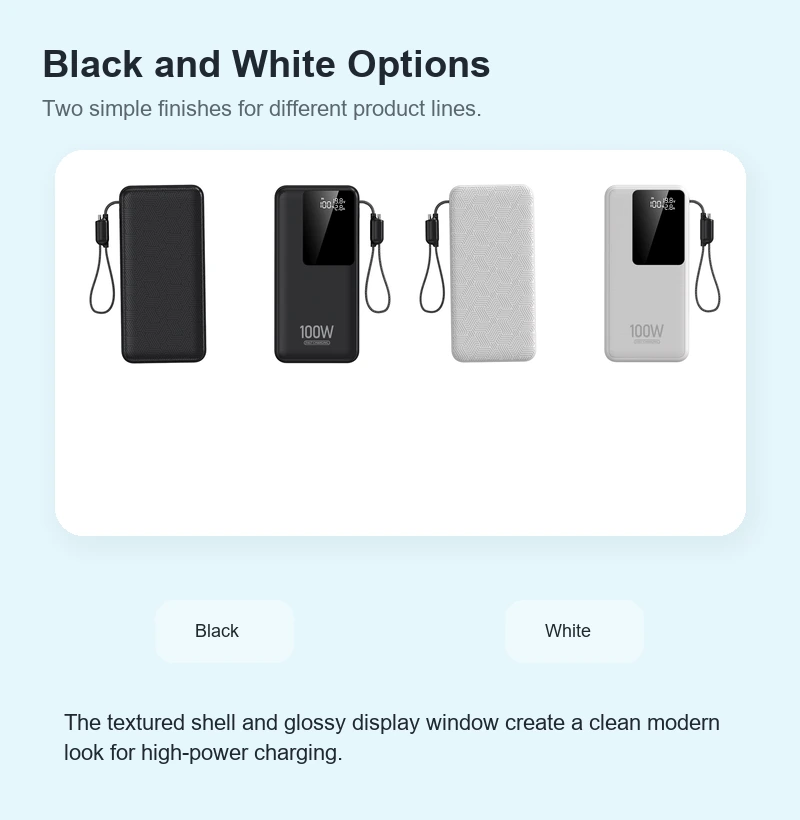
Standard OEM logo and packaging programs start at 500 pieces. Light color, documentation or packaging changes can start at 1,000 pieces, subject to feasibility. Cable, battery, PCBA, firmware, thermal or structural ODM work generally starts at 2,000 pieces.
Frequently Asked Questions
What specifications are confirmed for the J721?
The published specification lists 20000mAh, dimensions of 153.7 × 73.5 × 26.8mm, Type-C input up to 65W, Type-C output up to 100W and USB-A profiles up to 22.5W.
What is confirmed about the 100W output?
The Type-C port and built-in cable list 20V/5A output, equivalent to 100W. Protocol and sustained-load performance require verification.
Which devices can use the Type-C output?
Compatibility depends on protocol negotiation and device input requirements. Test the exact target-device list on the approved sample.
How many device charges can it provide?
No verified charge count is published. It depends on rated energy, conversion efficiency, output conditions and the target device.
What thermal evidence should buyers request?
Request sustained-load and temperature-rise results for the final PCBA, battery, cable, connectors and enclosure.
What transport evidence should buyers request?
Request the final Wh label, battery and transport documents, labeling files and model traceability for the production configuration.
What are the OEM and ODM order levels?
Standard OEM starts at 500 pieces, light customization can start at 1,000 pieces, and deeper ODM work generally starts at 2,000 pieces.
Reviews
There are no reviews yet.